
Demon Hunter Suing Over KPop Demon Hunters Matters Because the Christian Subculture Just Collided With Global Pop Culture in the Strangest Way Possible
the Christian Subculture Just Collided With Global Pop Culture in the Strangest Way Possible.
There are headlines that require analysis.
And then there is:
Christian metal band Demon Hunter is suing over KPop Demon Hunters.
Welcome to 2026.
Demon Hunter’s corporate entity, Hyde Lane, filed suit against Netflix, Netflix Studios and AEG Presents alleging trademark infringement and related claims involving the hugely successful KPop Demon Hunters property. The dispute intensified as that franchise expanded beyond a film into music, merchandise and plans for live touring—business areas much closer to Demon Hunter’s long-established brand. The case remains pending, and the allegations have not been adjudicated. (CCM Magazine)
At first glance, this is hilarious.
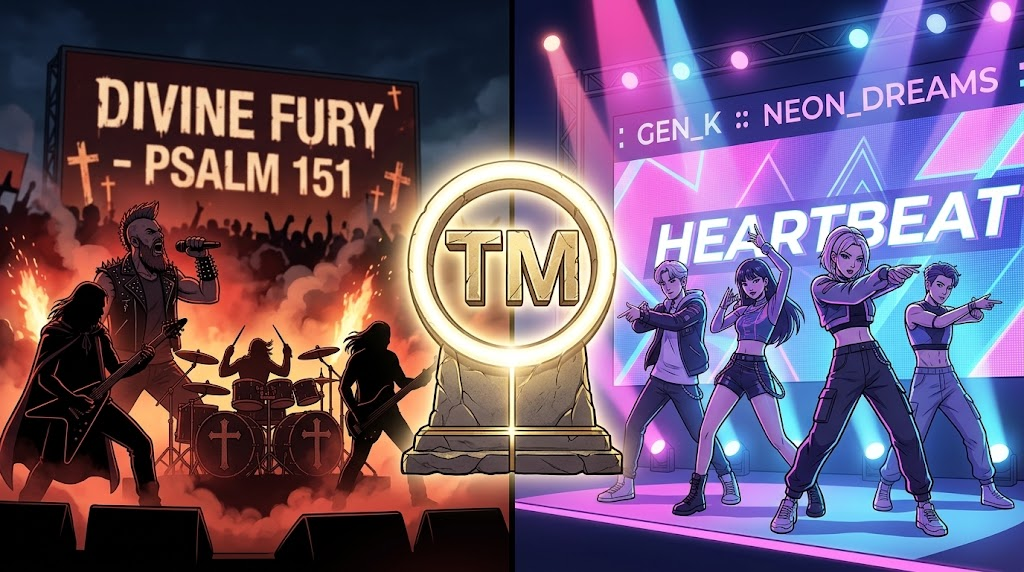
A Christian metal band versus animated K-pop demon hunters sounds like something generated after asking AI to combine every current entertainment trend.
But beneath the absurdity is a genuinely interesting cultural story.
Demon Hunter has existed for roughly a quarter-century.
That means the band built its identity during an era when Christian music largely operated inside a parallel entertainment ecosystem.
Christian bookstore.
Christian radio.
Christian festivals.
Christian magazines.
Christian audiences.
A name like Demon Hunter could build significant recognition within that ecosystem without regularly colliding with giant mainstream entertainment properties.
That wall no longer exists.
Everything lives inside the same search box now.
The same Spotify results.
The same YouTube recommendations.
The same merchandise marketplaces.
The same concert discovery systems.
The same social feeds.
The Christian subculture and global pop culture are no longer neighboring countries.
They share an apartment.
And sometimes somebody labels the food incorrectly.
According to reporting summarized by CCM, Demon Hunter’s filing even cites an instance in which a customer allegedly purchased roughly $500 in tickets to a Demon Hunter concert believing the tickets were for KPop Demon Hunters. (CCM Magazine)
That moves the issue beyond theoretical brand similarity.
Whether a court ultimately finds infringement is a legal question.
But culturally, the case demonstrates something Christian artists increasingly need to understand:
Your niche is not really a niche anymore.
Digital distribution collapsed the walls between categories.
That can be wonderful.
Christian artists can reach listeners who never enter Christian-media channels.
A worship song can trend beside rap.
A Christian rapper can appear on mainstream festival bills.
A faith-based series can become global entertainment.
But boundary collapse creates competition too.
Names.
Search visibility.
Audience attention.
Merchandise.
Algorithms.
Intellectual property.
Christian creators who once thought of themselves primarily as ministries increasingly operate inside an enormous commercial attention economy whether they like it or not.
That means professional infrastructure matters.
Trademark protection matters.
Rights management matters.
Business structure matters.
Christian artists sometimes feel uncomfortable discussing those things because commerce can sound less spiritual than ministry.
But stewardship includes protecting what you spent decades building.
There is another funny irony here.
For years, Christian entertainment desperately wanted mainstream culture to notice it.
Now Christian artists are discovering what happens when mainstream culture gets close enough to step on the same intellectual-property lawn.
That is progress of a strange kind.
Christian culture is no longer invisible.
Sometimes it is visible enough to require lawyers.
Sponsored


3 Takeaways
- Demon Hunter’s lawsuit concerns alleged trademark confusion as KPop Demon Hunters expands into music, merchandise and touring.
- Digital culture has largely erased the old separation between Christian entertainment and mainstream entertainment ecosystems.
- Christian creators increasingly need serious business, trademark and rights infrastructure alongside artistic and ministry ambitions.
Bottom line: Demon Hunter versus KPop Demon Hunters may be the funniest entertainment lawsuit of the year, but the underlying lesson is serious: Christian culture now lives in the same global marketplace as everybody else. Visibility brings opportunity—and occasionally a trademark dispute nobody could have imagined in 2001.
Need a steadier next step for real life? Try ZUL Daily Verse for a Bible verse, a modern-day translation, and 3 practical actions for today.
Try ZUL Daily Verse