Dolly Parton’s Death Matters to Christian Culture Because She Spent a Lifetime Refusing to Choose Between Faith, Fame and Loving Everybody
She Spent a Lifetime Refusing to Choose Between Faith, Fame and Loving Everybody.
Dolly Parton died this week at 80, and something interesting happened almost immediately.
The tributes did not stay inside country music.
Christian artists remembered her.
Pop culture remembered her.
Actors remembered her.
People who grew up in churches remembered her.
People who had almost nothing else culturally in common remembered her.
Parton’s family announced her death Aug. 25, while Christian artists including members of for KING + COUNTRY publicly reflected on her life and faith. (Christian Post)
That breadth tells us something important.
Dolly Parton became much more than a singer.
She became one of those increasingly rare cultural figures whom multiple generations felt they somehow knew.
And faith was part of that story without becoming the entirety of her public persona.
That distinction matters.
Christian celebrity culture sometimes seems to offer artists only two choices.
Be explicitly Christian enough that nearly everything you produce is categorized as Christian entertainment.
Or succeed in mainstream culture while keeping faith mostly private so it does not interfere with the brand.
Parton largely refused that binary.
She could talk about Jesus.
She could sing gospel.
She could write country songs about heartbreak, poverty and desire.
She could make movies.
She could joke.
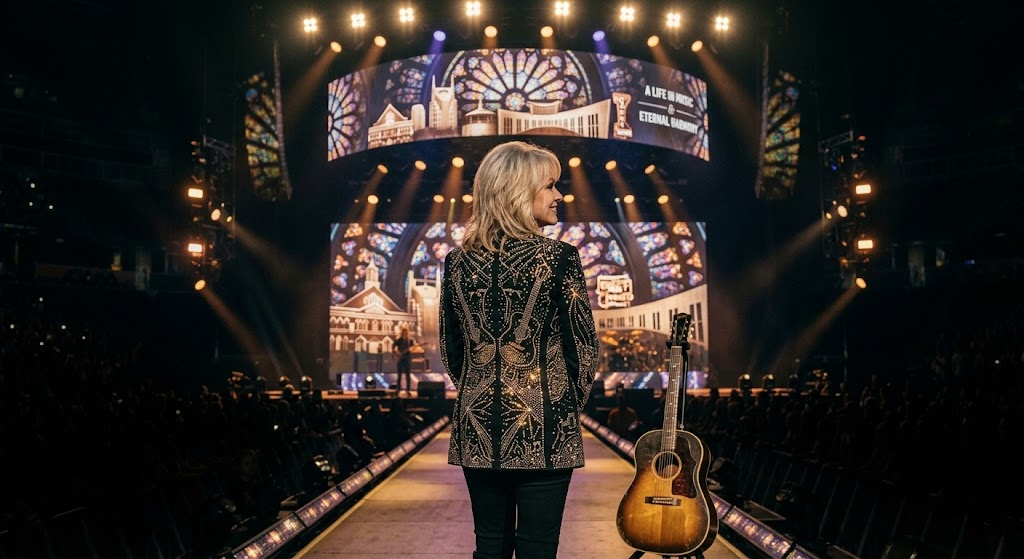
She could dress with enough rhinestones to create her own gravitational field.
And none of those identities seemed to cancel the others.
That may be one reason so many people trusted her.
There was very little sense that Dolly Parton was asking audiences to approve a carefully managed image.
The exaggeration was part of the honesty.
She famously built a larger-than-life visual persona while remaining remarkably grounded about where she came from.
That paradox was the brand.
And somewhere inside it was a faith that appeared less interested in policing everyone else than in shaping how she treated people.
That distinction deserves attention.
Modern Christian culture spends enormous energy debating whether believers are being sufficiently outspoken.
But Parton’s legacy raises a different question:
What if the most convincing public expression of faith is not always how frequently someone labels themselves?
What if sometimes it is what consistently spills out of the life?
Generosity.
Humility.
Forgiveness.
Joy.
Service.
Parton’s Imagination Library became one of the most extraordinary literacy efforts associated with any entertainer, distributing books to children around the world.
That was not a worship album.
It was love becoming infrastructure.
And perhaps that is why her passing feels bigger than the loss of another famous musician.
She represented an older idea of celebrity.
The goal was not simply to accumulate attention.
You eventually did something with it.
Parton’s career also offers an important lesson for Christian artists who want to engage mainstream culture.
She did not become culturally broad by becoming less specific.
She became more herself.
The accent stayed.
The faith stayed.
The mountain stories stayed.
The humor stayed.
The look certainly stayed.
And somehow specificity created universality.
That runs against much of modern marketing.
We are constantly told to sand away whatever might confuse the audience.
Dolly did the opposite.
She became unmistakable.
Christian artists should notice that.
The future of faith in pop culture may not belong to artists who find the safest possible middle ground between Christian and mainstream.
It may belong to artists so deeply formed in who they are that they no longer need to worry about which category accepts them.
Parton never needed the whole room to agree with her worldview in order to love the room.
That may be the harder Christian witness.
Not withdrawal.
Not domination.
Presence.
Warm enough that people stay.
Strong enough that you remain yourself.
Sponsored


3 Takeaways
- Dolly Parton’s cultural reach crossed musical, political and religious boundaries without requiring her to hide her Christian faith.
- Her legacy demonstrates that generosity and service can communicate belief as powerfully as public religious branding.
- Mainstream relevance does not always require becoming less distinctive. Parton became more universal by becoming unmistakably herself.
Bottom line: Dolly Parton’s death matters to Christian culture because her life challenged one of our favorite false choices. Faith and cultural reach do not have to cancel one another. Sometimes the strongest witness is a person secure enough in what they believe to love people who do not necessarily believe it with them.
Need a steadier next step for real life? Try ZUL Daily Verse for a Bible verse, a modern-day translation, and 3 practical actions for today.
Try ZUL Daily Verse