Spotify Labeling AI Artists Matters Because We’re About to Find Out Whether Listeners Care Who—or What—Made the Song
We’re About to Find Out Whether Listeners Care Who—or What—Made the Song.
Music has always contained illusion.
Studio tricks.
Pitch correction.
Session musicians.
Stage names.
Manufactured personas.
But artificial intelligence introduces a different question.
What if the artist does not exist?
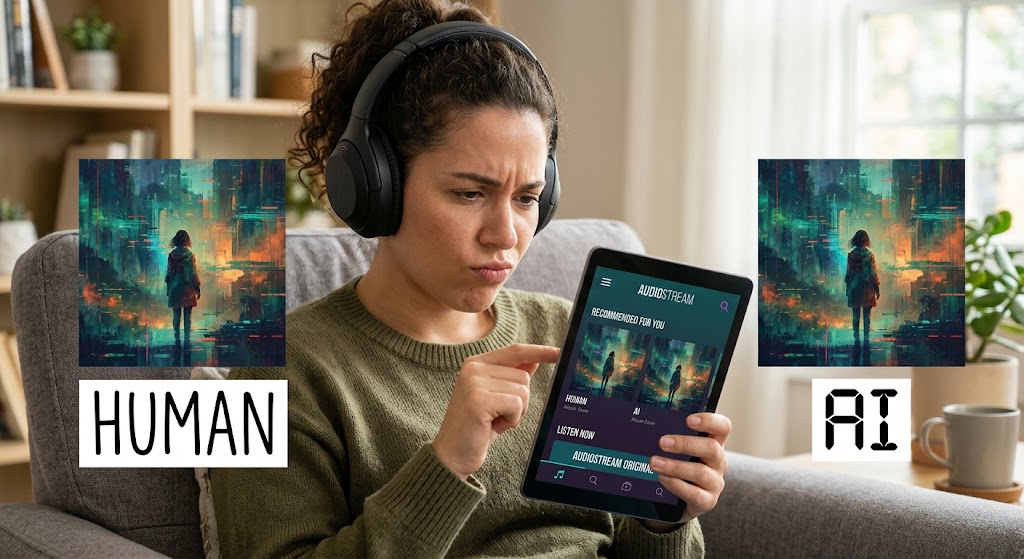
RELEVANT reported Aug. 12 that Spotify is moving toward labeling artists or music that are not created by real human performers, part of the music industry’s growing struggle with AI-generated material. (RELEVANT)
That label sounds administrative.
It may become culturally enormous.
Because music is not merely sound.
Part of what listeners experience is relationship with the person they believe made it.
We hear heartbreak differently when we believe somebody actually had their heart broken.
We hear worship differently when we believe a person actually prayed the words.
We hear protest differently when someone risked something by saying it.
AI can reproduce sonic patterns.
The unresolved question is whether it can reproduce stakes.
Christian music has a particular reason to care.
Testimony is one of the genre’s oldest currencies.
This happened to me.
God met me here.
I doubted.
I survived.
I believed.
Those claims become strange when a synthetic artist sings them.
Who is the “I”?
Who suffered?
Who believed?
Who is worshipping?
Maybe listeners will not care.
Perhaps sufficiently beautiful music becomes meaningful regardless of origin.
But if audiences do care, provenance may become a new premium.
Human-made.
Human-written.
Human-performed.
Not because machines cannot make attractive sounds.
Because the human story behind the sound becomes part of its value.
That may create an unexpected future where imperfection becomes desirable.
A cracked voice.
A breath left in the mix.
Tempo that moves slightly.
Evidence that a body was there.
In an age of infinite polish, fingerprints may become luxury goods.
Sponsored
3 Takeaways
- Streaming platforms are beginning to distinguish AI-generated artists or music from human creators.
- The distinction matters because listeners often connect not only to a song but to the human story behind it.
- Christian music, which frequently relies on testimony and worship, faces particularly deep questions about synthetic authorship.
Bottom line: Spotify labeling AI artists matters because the next music debate may not be whether AI sounds good. It may be whether beauty means something different when somebody actually lived the song.
Need a steadier next step for real life? Try ZUL Daily Verse for a Bible verse, a modern-day translation, and 3 practical actions for today.
Try ZUL Daily Verse