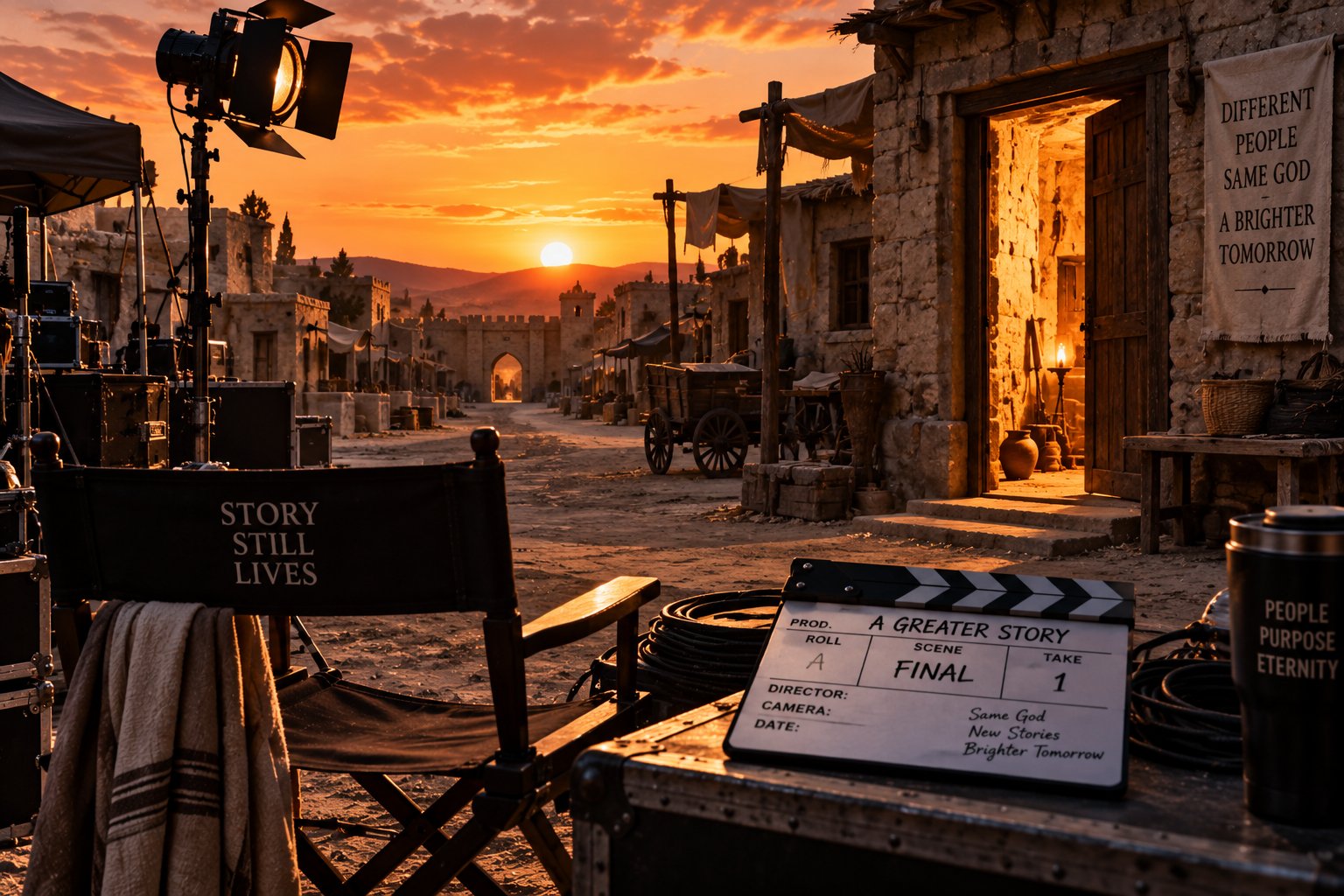

There Are So Many Bible Shows Right Now Because Hollywood Finally Realized the Sacred Still Has an Audience
RELEVANT rounds up the Bible show boom and asks the question the church should be asking too: what version of God is Hollywood making imaginable?
RELEVANT’s recent piece “There Are a Lot of Bible Shows Now — Here’s the Ones You Need to Know” captures a trend that has been building quietly and now feels unmistakable: Bible stories are not disappearing from screens. They are multiplying. The article situates current and upcoming shows as part of a larger wave of Bible-based television and film that is trying to translate sacred stories into prestige formats for modern audiences. (RELEVANT)
That matters because it tells us something about cultural appetite.
For years, many people assumed Hollywood had largely moved on from explicit biblical storytelling except as niche religious programming. But the last few years have complicated that assumption. The Chosen created a different kind of faith-based fandom. New series keep appearing. Mel Gibson’s Resurrection of the Christ project remains in the headlines, with RELEVANT reporting last week that the two-part film rollout has now been pushed so the conclusion arrives in 2028. (RELEVANT)
This does not mean Hollywood has become spiritually devout. It means producers have noticed what churches sometimes forget: the sacred still has dramatic power.
Stories about calling, betrayal, suffering, deliverance, sacrifice, miracle, kingdom, and resurrection still work because they are not only religious. They are archetypal. They speak to human longing at a scale modern entertainment often struggles to match.
That is why the current Bible-show wave is more than a trend piece. It signals that biblical imagination still carries cultural electricity.
But here is the catch: not every Bible adaptation is equally meaningful just because it uses sacred material. Some will flatten mystery into content. Some will turn theology into aesthetics. Some will trade reverence for spectacle. The return of Bible stories to mainstream screens should not make Christians uncritical.
Still, it should make them pay attention.
Because stories shape imagination long before arguments change convictions. If people keep encountering Scripture first through screen culture, then the question is not whether Christians approve of that in theory. The question is whether they are prepared to think seriously about what kinds of biblical storytelling deepen reverence — and what kinds merely exploit spiritual imagery.
Modern Christianity has often been better at complaining about media than at helping people read it wisely. This is a chance to do better.
If Bible shows are becoming part of the mainstream entertainment ecosystem again, Christians should be asking:
what version of God is being made imaginable?
what kind of holiness is being portrayed?
what gets emphasized, and what gets thinned out?
how do screen stories shape the emotional grammar through which viewers approach Scripture itself?
These are pop-culture questions. But they are also discipleship questions.
3 Takeaways
- The rise of Bible shows suggests sacred stories still have real entertainment power. (RELEVANT)
- Christian pop culture should not only celebrate visibility. It should also ask what kind of biblical imagination these shows are training.
- Screen storytelling increasingly shapes how people emotionally encounter Scripture. That makes media literacy a spiritual issue.
Bottom line: There are so many Bible shows right now because Hollywood has rediscovered that sacred stories still hold attention. The bigger question is whether Christians are ready to engage that resurgence with more than either hype or suspicion. (RELEVANT)
Need a steadier next step for real life? Get your personalized daily coaching drop at ZUL Daily Verse — a Bible verse, a modern-day translation, and 3 practical actions for today.
Try ZUL Daily Verse