Billy Corgan Saying “I’m a Christian” After Decades of Spiritual Ambiguity Matters Because Rock Culture Still Treats God as a Third Rail
The Smashing Pumpkins frontman says he decided honesty about Jesus mattered more than the possibility that explicit faith could damage his career.
Billy Corgan has been talking about God for years, but there is a difference between spiritual language and a sentence that removes ambiguity.
On his podcast “The Magnificent Others,” while speaking with Stryper’s Michael Sweet, the Smashing Pumpkins frontman said plainly: “I’m a Christian as well.” He then explained why he had become willing to speak about Jesus even if doing so carried a professional cost.
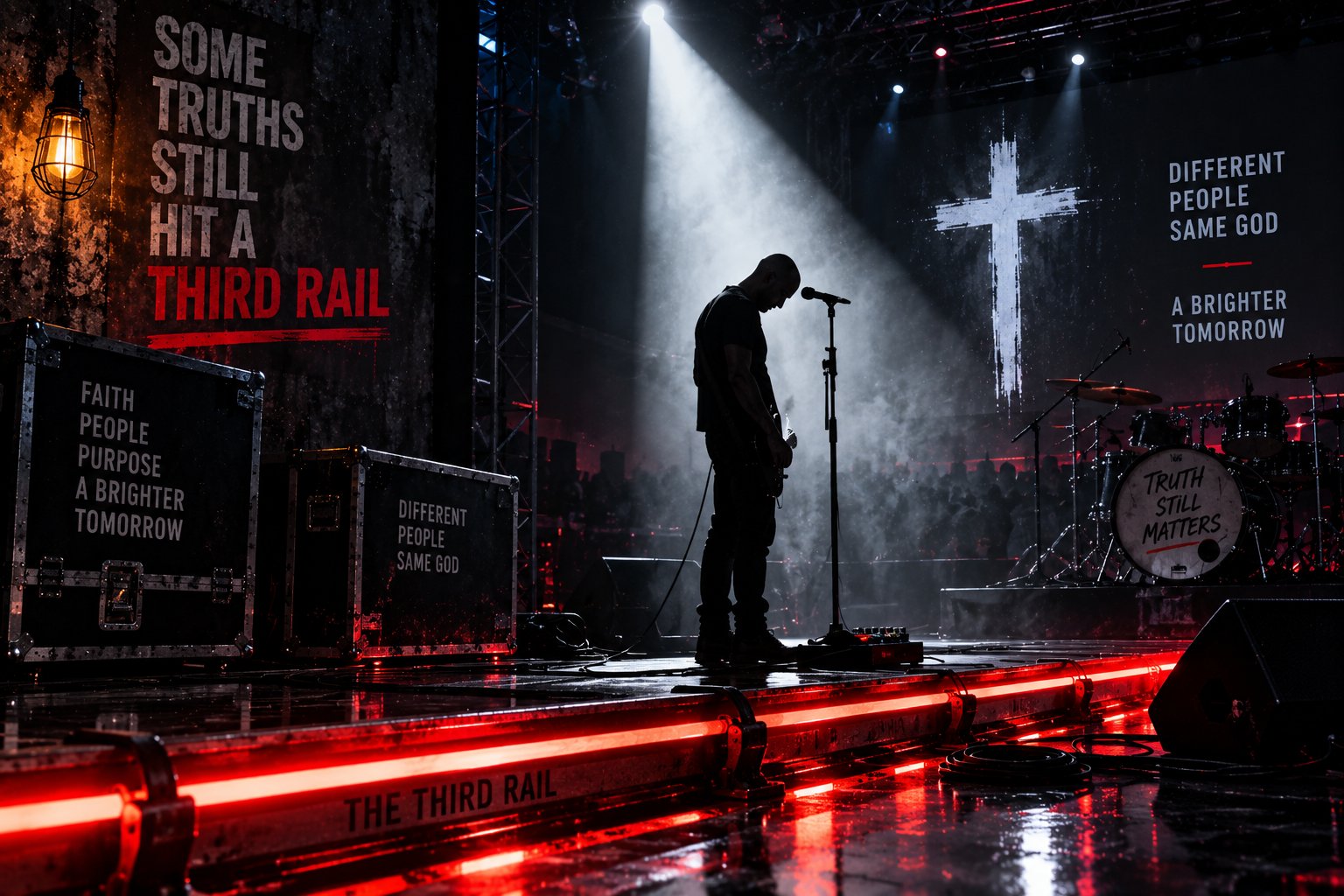
Corgan described God as the “third rail” of rock and roll — the subject an artist can touch only at the risk of being dismissed, categorized or losing credibility. His point was not that rock lacks religious imagery. It has always been full of it. The danger arrives when metaphor becomes confession.
That distinction remains powerful in 2026. Popular music is comfortable with spirituality as texture. God can appear as symbol, mood, rebellion or childhood memory. Specific belief is harder because it asks audiences to deal with the artist as a person whose worldview may make actual claims.
Corgan said he eventually decided that if honesty about Jesus harmed his career, he was willing to accept the consequence. The reasoning was artistic as much as religious: if he could not be honest about who he was, what exactly was he asking fans to believe in?
That is a useful question for Christian artists too. The industry can pressure believers in opposite directions. Some are rewarded for making faith maximally explicit. Others are encouraged to keep faith strategically vague to preserve crossover possibilities. Both can become forms of performance.
Corgan’s significance lies in coming from outside the conventional Christian music ecosystem. He does not need Christian radio to explain his career. He has decades of alternative-rock credibility, global recognition and a catalog already secure in mainstream music history.
That gives his declaration a different weight. It is not a shortcut toward a new audience. It is an older artist deciding that the cost of being misunderstood is preferable to the cost of self-editing something he now considers essential.
Sponsored


Need a steadier next step for real life? Try ZUL Daily Verse for a Bible verse, a modern-day translation, and 3 practical actions for today.
Try ZUL Daily Verse