Carrie Underwood Thanking God for America Matters Because Public Gratitude Is Becoming One of the Riskiest Things a Celebrity Can Say Out Loud
Public Gratitude Is Becoming One of the Riskiest Things a Celebrity Can Say Out Loud.
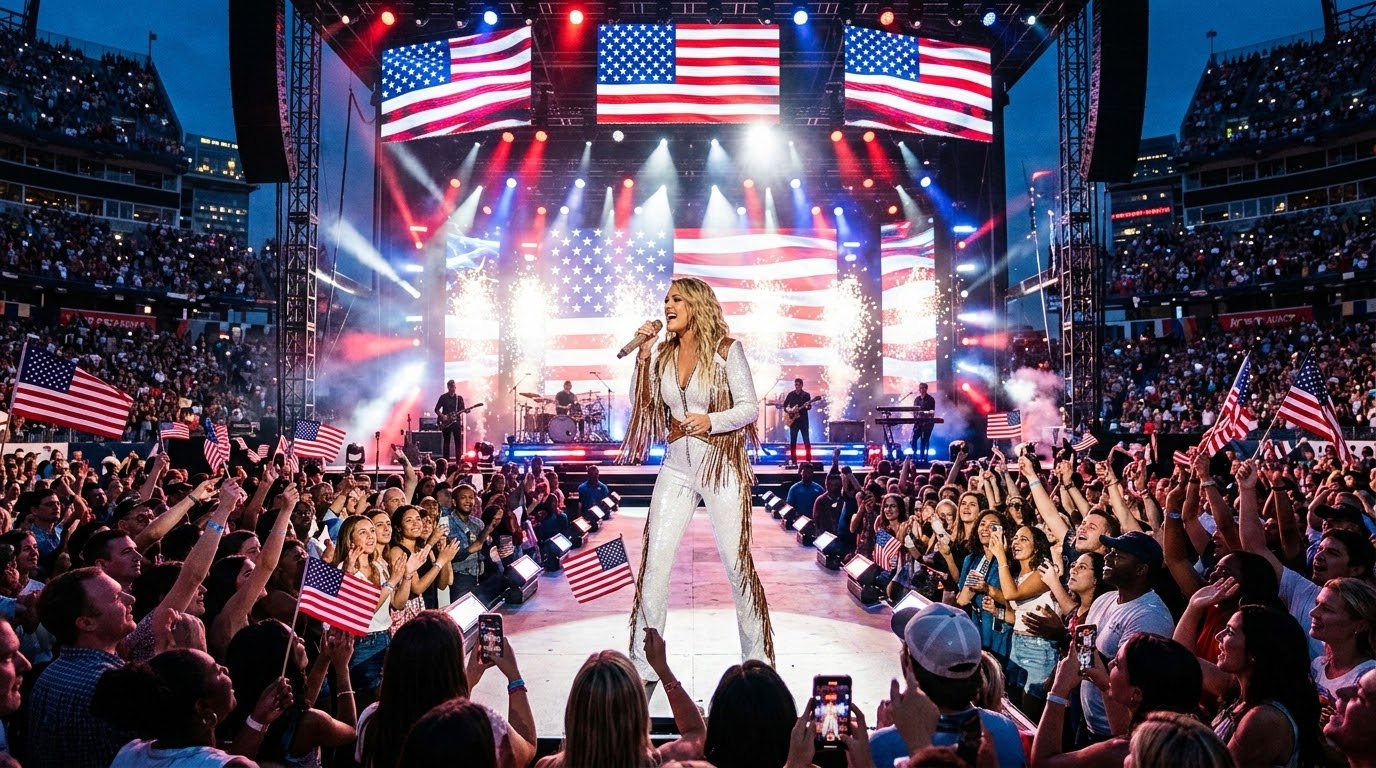
When The Christian Post highlighted Carrie Underwood saying “Thank you, Lord” for letting me live in America ahead of the country’s 250th birthday, the line landed with unusual force precisely because it touched two public nerves at once: faith and patriotism. In the current cultural climate, either one can feel risky. Put them together and the statement becomes even harder to deliver without backlash, suspicion, or instant politicization. (Christian Post)
That is why the moment matters.
Not because celebrity gratitude automatically becomes cultural wisdom. It does not. And not because every patriotic statement deserves applause. It does not. The more interesting reason is that gratitude itself has become one of the hardest public emotions to express credibly. Modern public culture is saturated with critique, irony, and strategic positioning. It knows how to call out, deconstruct, and expose. It is much less comfortable with simple public thankfulness, especially when that gratitude is directed toward God and toward country in the same sentence. Underwood’s statement matters because it challenges that discomfort directly. (Christian Post)
Country music is one of the few mainstream environments where this kind of statement can still sound plausibly rooted rather than instantly absurd. That matters because it reveals how genre still shapes what kinds of faith can be spoken publicly. In pop culture at large, celebrity religion often has to arrive as vulnerability, therapy, or abstraction. In country, it can still arrive more plainly — through gratitude, providence, family, place, and memory. Underwood’s words fit that grammar. But they also test its limits, because even in country culture, the public naming of God and national gratitude no longer passes without cultural tension. (Christian Post)
Christian pop culture should pay attention to that. For years, it has often treated gratitude as the least controversial of spiritual emotions. But in a fragmented, suspicious age, gratitude has become politically and morally loaded. To say “I am thankful” in public now almost always invites a second question: thankful for what, exactly, and at whose expense? Those are not trivial questions. They matter. But a culture that loses the ability to express gratitude at all becomes emotionally distorted. It becomes capable of outrage without joy, diagnosis without affection, critique without wonder. That is one reason moments like this resonate so strongly. They remind people that positive attachment still exists, even if it no longer feels culturally uncomplicated. (Christian Post)
The strongest part of this story is not really about Underwood alone. It is about whether public Christianity can still speak in the language of gratitude without sounding either naïve or manipulative. That is a hard task. Cheap gratitude is easy to mock because it ignores complexity. But mature gratitude is different. Mature gratitude can acknowledge imperfection, conflict, and history while still refusing to surrender all love to cynicism. In that sense, public gratitude may actually require more courage now than public deconstruction does. Deconstruction is expected. Gratitude risks misunderstanding. (Christian Post)
That is why Christian pop culture needs more than just better “values messaging.” It needs public figures capable of embodying grateful seriousness — people who can speak positively about God, place, belonging, or country without collapsing into denial about what is broken. Underwood’s line is culturally significant because it reminds us that many people are still hungry for that register. Not propaganda. Not triumphalism. Just a public emotional posture that says love and thanks are still possible. In a culture increasingly defined by suspicion, that is not a minor thing. (Christian Post)
Sponsored


3 Takeaways
- The Christian Post’s America 250 coverage highlighted Carrie Underwood thanking God for letting her live in America ahead of the nation’s 250th birthday. (Christian Post)
- The deeper issue is that public gratitude has become culturally risky, especially when faith and patriotism appear together. (Christian Post)
- Christian pop culture needs more mature public gratitude — not simplistic positivity, but gratitude strong enough to survive complexity. (Christian Post)
Bottom line: Carrie Underwood thanking God for America matters because public gratitude is becoming one of the riskiest emotions a celebrity can express out loud. And that is exactly why it still carries so much cultural force when someone dares to say it plainly. (Christian Post)
Need a steadier next step for real life? Try ZUL Daily Verse for a Bible verse, a modern-day translation, and 3 practical actions for today.
Try ZUL Daily Verse