The Dove Awards Lineup Is Becoming a Map of Christian Music’s New Center: Less One Genre, More Shared Ecosystem
The final performer list mixes worship, gospel, country crossover and a Dolly Parton tribute under a theme built around unity.
Awards shows are usually presented as celebrations of achievement. They are also maps. Look at who gets invited to perform, who presents, who receives tribute and which collaborations are designed to feel historic, and you can see how an industry understands itself.
The final lineup for the 57th Annual GMA Dove Awards is unusually revealing. Brandon Lake is scheduled to perform with Lainey Wilson. Tye Tribbett, Hope Darst and Elevation Worship are part of the bill. Amy Grant and Natalie Grant are set to share a stage for the first time in a tribute to Dolly Parton. Presenters include gospel legends, contemporary worship leaders and actors associated with “The Chosen.”
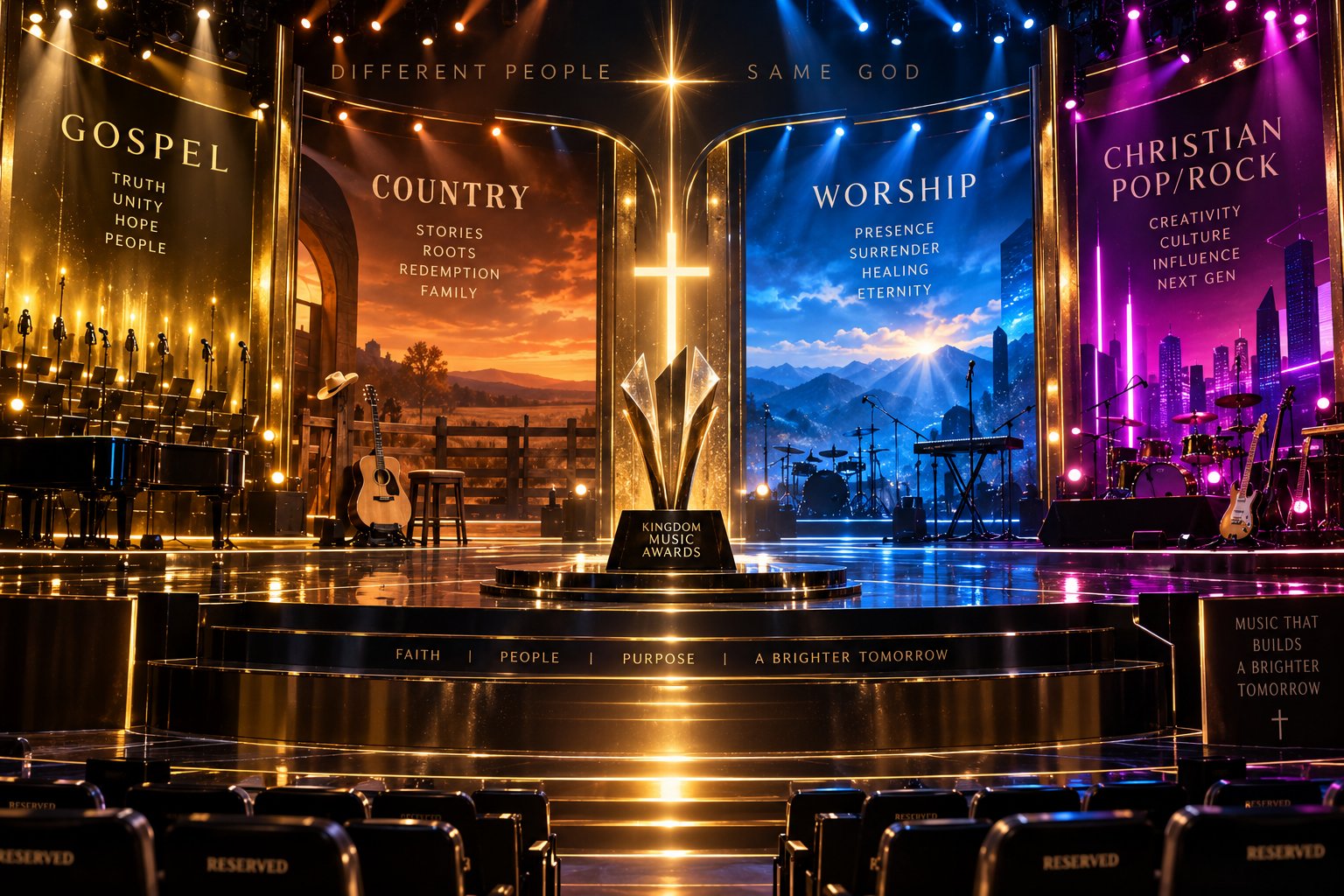
The evening’s theme, “Together For One,” is predictable awards-show language until you consider how fragmented Christian music once was. Gospel, Southern gospel, worship, Christian rock, contemporary Christian pop and Christian hip-hop often functioned as separate markets with separate audiences and different institutional histories.
Streaming has complicated those divisions. Fans move more freely. Artists collaborate across categories. Country stars speak openly about faith. Worship songs enter mainstream charts. Gospel vocalists appear in pop spaces without needing to translate themselves.
The Dove Awards are increasingly reflecting that ecosystem rather than pretending Christian music is a single sonic genre. The common element is theological and cultural identity, not production style.
The Dolly Parton tribute makes that especially visible. Parton occupied mainstream country, gospel, film, philanthropy and Christian cultural memory simultaneously. A tribute by Amy Grant and Natalie Grant recognizes a legacy that never fit comfortably inside one market category.
There are risks in emphasizing unity too aggressively. Differences between traditions matter. Gospel history cannot be reduced to generic contemporary worship, and Christian hip-hop is not merely another production flavor. A healthy ecosystem does not erase distinctions; it creates enough shared space for the traditions to recognize one another.
That is what the 2026 lineup suggests at its best. Christian music’s future may be less about one dominant sound and more about a network of scenes that increasingly understand themselves as part of the same cultural conversation.
Sponsored


Need a steadier next step for real life? Try ZUL Daily Verse for a Bible verse, a modern-day translation, and 3 practical actions for today.
Try ZUL Daily Verse