Joel Houston Saying Christian Music Needs to Get Weird Matters Because Safe Music Eventually Becomes Invisible Music
Safe Music Eventually Becomes Invisible Music.
Christian music has spent decades trying to figure out how to sound relevant.
Joel Houston is suggesting a more interesting question:
What if it just sounded interesting?
The longtime Hillsong United songwriter told RELEVANT that Christian music’s small share of the overall music market should not be blamed on the absence of Christian listeners.
Christians listen to plenty of music.
They just do not necessarily listen to music labeled Christian.
They are listening to country. Rock. Indie. Americana. Electronic music. Hip-hop.
Houston’s diagnosis is uncomfortable because it shifts the problem away from audience loyalty and toward artistic ambition.
Maybe the audience is not abandoning Christian music.
Maybe Christian music has been giving the audience too few reasons to stay.
That is where “weird” becomes important.
Not weird for the sake of weirdness.
Not deliberately inaccessible.
Weird meaning distinctive enough that you cannot immediately predict the next four bars.
Christian music has historically struggled with this because the ecosystem rewards usability.
Radio needs recognizable formats. Churches need singable songs. Labels need dependable audiences. Streaming algorithms need recognizable categories.
Eventually the incentives produce music that works.
But “works” and “matters” are not always the same thing.
Once every song follows the same emotional architecture — intimate verse, lifting pre-chorus, enormous chorus, repeated bridge, spontaneous-sounding moment — listeners begin to recognize the machine.
And recognition can become boredom.
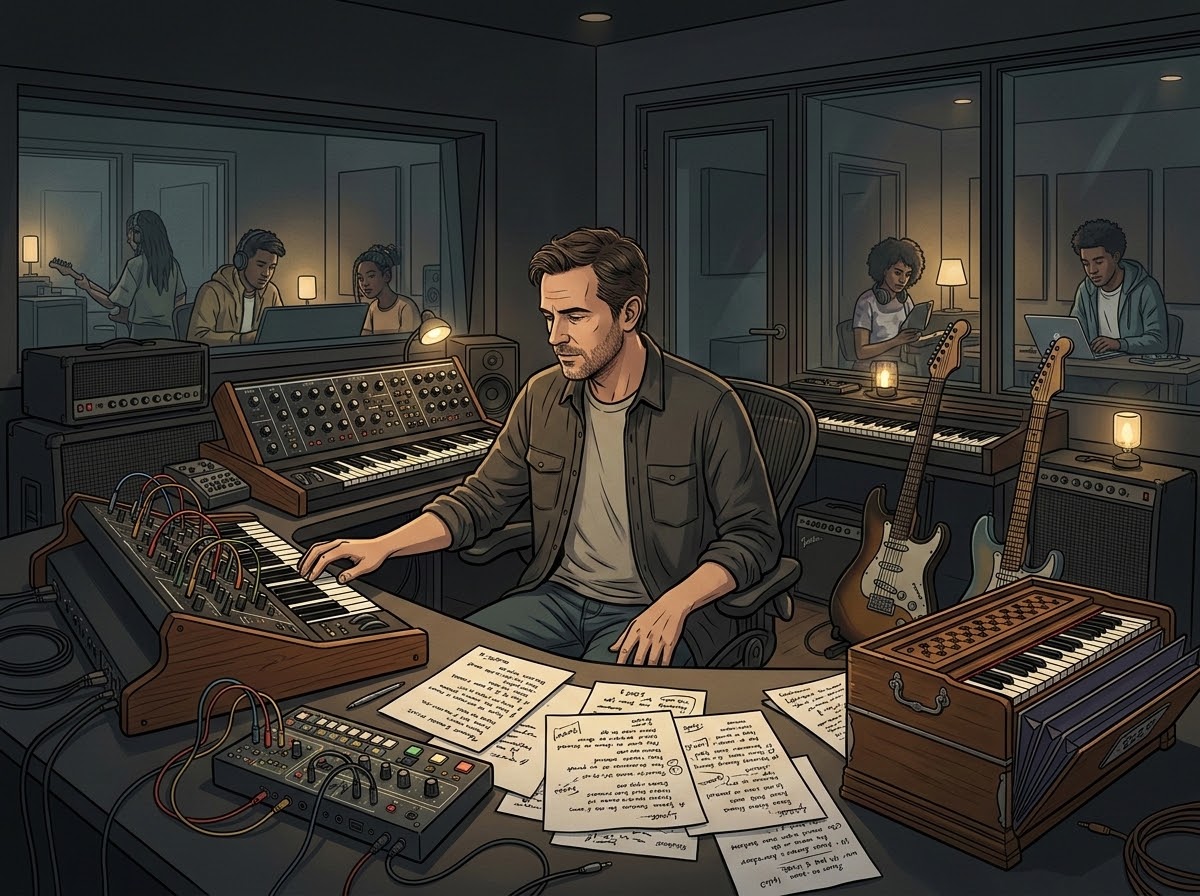
Houston sees younger artists doing something different. They are creating Christian indie, EDM, rock and experimental music without first asking whether the music fits inside a recognized Christian-market lane.
That may be exactly what the genre needs.
Previous generations often approached crossover by asking how Christian artists could sound competitive with mainstream artists.
The newer generation seems less interested in crossover.
They simply grew up in the same sonic world as everyone else.
Genre borders mean less to them.
A kid can listen to worship music, Kendrick Lamar, Phoebe Bridgers, Fred again.. and country music inside the same afternoon without experiencing any contradiction.
So why should Christian creativity continue behaving as though the listener lives in 1998?
This matters beyond music.
Christian pop culture has frequently mistaken safety for faithfulness.
Safe movies. Safe comedy. Safe music. Safe storytelling.
The word “safe” usually means the work avoids certain content.
But artistic safety is something else.
Artistic safety means nothing surprising happens.
That may be a bigger problem.
Scripture itself is strange.
Burning bushes. Prophets lying on their sides. Angels terrifying people. Ezekiel’s wheels. A Savior entering history as an infant. Water becoming wine. A dead man walking out of a tomb.
Christian imagination emerged from material that is anything but predictable.
Yet Christian entertainment often behaves as though the highest creative virtue is familiarity.
Houston’s “weird” argument is really an argument for imagination.
And imagination may be one of the most spiritually serious things Christian culture can recover.
Because creativity reveals something about how people understand God.
If God is endlessly interesting but our art about God becomes monotonous, perhaps the problem is not the subject matter.
It is our willingness to explore it.
Christian music does not need to become stranger simply to get attention.
It needs enough courage to become specific again.
Specific artists. Specific voices. Specific sounds. Specific questions.
The best music does not sound like the genre.
It sounds like the person who made it.
Sponsored


3 Takeaways
- Christian listeners have not stopped loving music; they often simply choose music outside the Christian category.
- Artistic ambition may matter more than trying to protect a familiar genre formula.
- “Weird” can be another word for distinctive — and distinctiveness is what keeps art from becoming invisible.
Bottom line: Joel Houston saying Christian music should get weird matters because safe music eventually becomes invisible music. Christian art does not need more permission to imitate what already works. It needs permission to surprise us again.
Need a steadier next step for real life? Try ZUL Daily Verse for a Bible verse, a modern-day translation, and 3 practical actions for today.
Try ZUL Daily Verse