Justin Bieber Leading Worship at Coachella Says Something Bigger Than Celebrity Faith
When one of pop culture’s biggest stages makes room for worship, the real question is not whether it was viral. It is whether it was true.
There are certain moments in modern Christianity that instantly create two equal and opposite reactions.
Some people see them and think: This is amazing. Look at God moving in public. Others see the exact same moment and think: This is spectacle. This is branding. This is not revival.
Justin Bieber leading worship during his Coachella set last weekend is one of those moments.
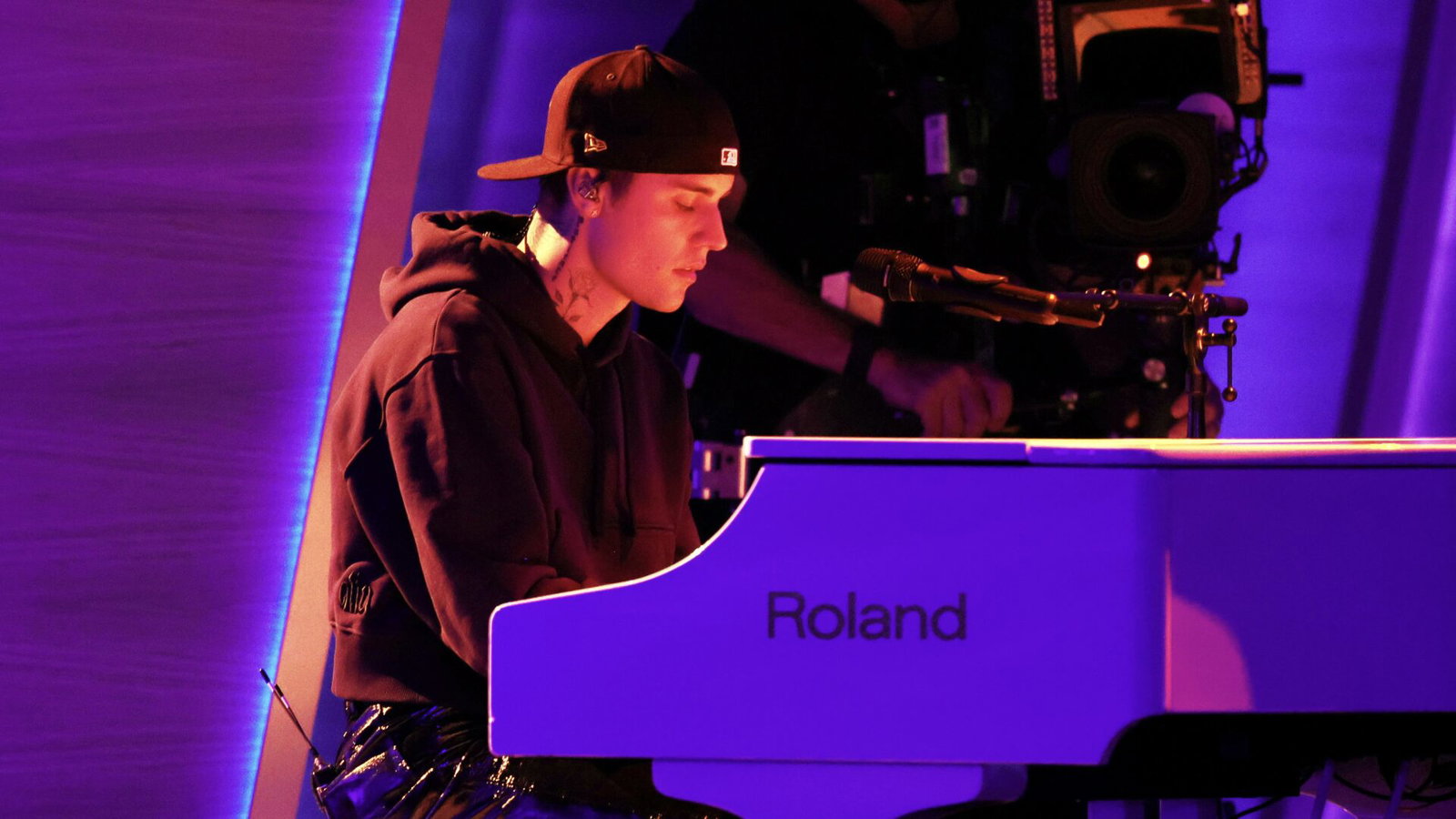
RELEVANT reported on April 13 that Bieber performed “Glory Voice Memo” during his headlining set, turning one of the biggest stages in popular music into an overtly faith-filled moment. Whether you loved it, doubted it, or felt unsure what to do with it, the fact remains: worship language and Christian symbolism showed up in one of the most mainstream, image-heavy cultural environments in the world. (RELEVANT)
That is why this story matters.
Not because celebrity faith is automatically trustworthy. Not because Coachella is suddenly church. Not because one performance proves some kind of national awakening.
It matters because it forces modern Christianity to confront a deeper question:
What happens when worship enters a room built for spectacle?
The modern church still does not know how to handle public faith when it shows up in complicated places
A lot of Christians prefer their categories clean.
We like obvious distinctions:
sacred versus secular
church stage versus festival stage
worship versus entertainment
ministry versus celebrity
The problem is that real life rarely honors our clean categories.
Modern Christianity now lives in a world where faith is constantly crossing public boundaries. Athletes talk about Jesus in postgame interviews. Actors post about prayer. influencers quote Scripture in between skincare content and gym clips. Musicians fold worship language into festival sets. The old map no longer works neatly.
And that makes many believers uncomfortable.
Because once faith appears in mainstream spaces, you lose control of the frame. You cannot guarantee motive. You cannot script the atmosphere. You cannot prevent sincerity and performance from living dangerously close to each other.
But maybe that discomfort tells us something important.
Maybe the church has gotten so used to protected environments that we no longer know how to evaluate public faith except in extremes. We either canonize it too quickly or dismiss it too quickly. We either call it revival or call it fake.
Wisdom usually moves slower than that.
Worship on a festival stage is not nothing — but it is not everything either
Here is the first thing worth saying clearly:
A moment like this is not meaningless.
If one of the most recognizable pop stars in the world pauses in the middle of a Coachella headlining set to perform a song centered on glory, God, and worship, that is not culturally neutral. It is a form of witness, however complicated. It places Christian language in front of millions of people who would not have encountered it in church that night. (RELEVANT)
That matters.
It matters because modern public life is not as spiritually closed as many assume. It matters because Christianity still carries symbolic and emotional force, even in spaces designed primarily for consumption and spectacle. It matters because some people watching that moment likely felt something they did not expect to feel.
But the second thing worth saying is just as important:
A moment like this is not automatically deep.
Public faith can be sincere and still incomplete. Powerful and still ambiguous. Emotionally affecting and still spiritually thin. A worship song on a festival stage may plant a seed, provoke a thought, or create a crack in someone’s assumptions. But it can also be absorbed into the machinery of celebrity, image, and mood without demanding much of anyone.
That is the tension modern Christianity has to learn to live inside.
Celebrity faith reveals our own spiritual confusion
Part of the reason these stories create such strong reactions is that they expose our uncertainty about what we think witness is supposed to look like.
When a pastor leads worship in church, we know the frame. When a celebrity leads worship at Coachella, the frame gets unstable.
Is this testimony? Is it branding? Is it personal overflow? Is it a curated emotional beat in a larger production?
The honest answer may be: some mixture of those things.
And that is precisely why this moment is useful to think about.
Because Christianity in public life will almost never arrive in perfectly controlled purity. It arrives through flawed people, layered motives, compromised settings, and unexpected openings. The question is not whether every public act of faith is pristine. The question is whether Christians have developed the maturity to discern what is actually happening without collapsing into cynicism or hype.
That kind of maturity is in short supply.
Some believers desperately want mainstream validation, so any high-profile faith moment feels like victory. Others are so wary of celebrity culture that they cannot imagine God using anyone famous without it being corrupted.
Both instincts are understandable. Neither is sufficient.
Modern Christianity needs a theology of witness that works outside the sanctuary
This is where the deeper lesson lives.
If faith is only legible to us when it appears in explicitly church-shaped environments, then our theology of witness is too small for the actual world we live in.
The early church did not spread through perfectly curated sacred spaces. It spread through public squares, homes, empire, marketplaces, prisons, political tension, and compromised cities. Christianity has always had to speak in mixed environments. The challenge is not to avoid public spaces. The challenge is to speak faithfully inside them.
That does not mean every public display of faith is good. It does mean public faith should not automatically make us nervous simply because the setting is messy.
A Coachella stage is messy.
So is Hollywood. So is politics. So is social media. So is the modern workplace.
The question is never simply, Was the room sacred enough? The question is, Was Christ named in a way that carried truth, weight, and honesty?
That is the better question.
And it is one modern Christianity needs to recover quickly, because public faith is not going away. It is becoming more visible, more contested, and more difficult to interpret.
The real danger is not that worship showed up at Coachella
The real danger is that Christians do not know how to evaluate the moment except by instinct.
Some will romanticize it because it felt emotionally powerful. Others will reject it because Coachella itself feels too worldly. But if our discernment never grows beyond “I liked the vibe” or “I hated the setting,” we will keep misunderstanding the times we live in.
A healthier response sounds more like this:
Thank God when Christ is named publicly.
Resist the urge to overstate what one moment means.
Refuse both naïve celebration and cheap cynicism.
Ask whether the witness points beyond the person and toward God.
Remember that real formation requires more than a viral moment.
That is not a dramatic response. But it is a wise one.
And wisdom is exactly what modern Christianity needs right now.
Because public faith is becoming one of the defining tensions of this era. Not private faith. Not institutional faith alone. Public faith — faith that appears in the open, among image, commerce, celebrity, politics, and platform culture.
The church cannot afford to think about that lazily.
Sponsored


3 Takeaways
- Bieber’s Coachella worship moment mattered because it placed Christian language in one of pop culture’s most visible spaces. That is not trivial, even if it is complicated. (RELEVANT)
- Public faith in mainstream culture should be met with discernment, not automatic hype or automatic suspicion. Modern Christianity needs better categories than “This is revival” or “This is fake.”
- The deeper issue is witness. Can Christians recognize and evaluate faith in public without needing everything to happen inside safe, familiar religious settings?
Bottom line: Justin Bieber leading worship at Coachella is not important because it proves celebrity Christianity works. It is important because it exposes one of the central tensions of modern Christianity: how to think clearly about public faith when it appears in rooms built for spectacle, not sanctity. That tension is not going away. Christians should get better at meeting it with wisdom. (RELEVANT)
Need a steadier next step for real life? Get your personalized daily coaching drop at ZUL Daily Verse — a Bible verse, a modern-day translation, and 3 practical actions for today.
Try ZUL Daily Verse