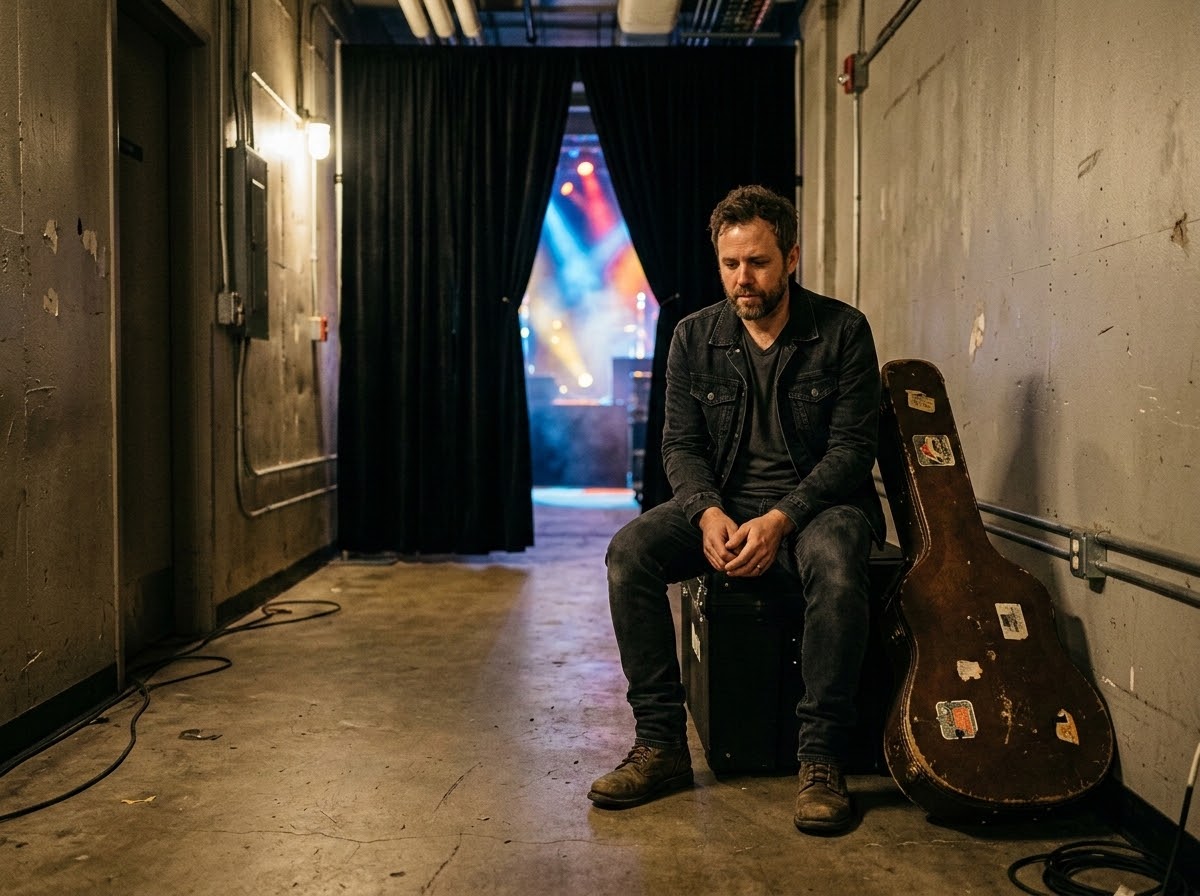
Pat Barrett Questioning the Performance of Worship Matters Because the Person on Stage and the Person Going Home Shouldn’t Become Strangers
the Person on Stage and the Person Going Home Shouldn’t Become Strangers.
Pat Barrett has helped write some of modern worship’s most recognizable songs.
That makes his current question uncomfortable in exactly the right way.
What happens when the version of ourselves we present in worship becomes increasingly disconnected from the person who actually walks out of the building afterward?
RELEVANT’s recent conversation with Barrett centers partly on that gap.
And it may be one of the most important conversations worship culture can have.
The modern worship environment is extraordinarily good at producing moments.
Lights lower. Music swells. A room sings together. Hands rise. Lyrics reinforce surrender, trust, intimacy and devotion.
Those moments can be real.
The mistake is assuming that because the moment is real, the transformation must be equally real.
They are not necessarily the same thing.
Music is powerful precisely because it can move the emotions quickly.
Character usually moves slowly.
That difference matters.
We can sing “I surrender all” in four minutes.
Actually surrendering something may take four years.
We can sing about trusting God while still living anxiously.
We can sing about forgiveness while refusing to call someone.
We can sing about generosity and then organize our lives completely around accumulation.
The answer is not cynical worship.
It is more integrated worship.
Barrett’s concern points toward a faith in which worship is not the stage where we portray our best spiritual selves but the place where our real selves are exposed.
That is harder.
Because performance is manageable.
Reality is messy.
A polished worship culture can accidentally train people to become fluent in the appearance of devotion.
They know when to raise their hands. They know the vocabulary. They know the emotional cues. They know the bridge.
But spiritual maturity is not choreography.
That is why Barrett’s question reaches beyond worship leaders.
Everyone performs.
Social media intensifies it.
People now maintain several public selves at once: professional self, family self, church self, Instagram self.
Each version is curated for the room.
The spiritual danger is not merely hypocrisy in the dramatic sense.
It is fragmentation.
Eventually we stop knowing which version is us.
Christian pop culture should care deeply about that because faith is supposed to move in the opposite direction.
Toward integration.
The person praying in public and the person responding to frustration in private should gradually become the same person.
Not perfect.
Whole.
Worship can help create that wholeness when the songs invite honesty rather than emotional theater.
That may mean fewer assumptions that every song needs to climax.
Some prayers end unresolved.
Some Sundays feel ordinary.
Some encounters with God are quiet enough that nobody posts them.
And that is okay.
Christian worship does not become less powerful when it becomes less performative.
It may become more believable.
Sponsored


3 Takeaways
- A powerful worship moment and a transformed life are related, but they are not identical.
- The danger of performance is fragmentation — becoming one person in public and another everywhere else.
- Worship should help close the distance between those selves rather than reward the appearance of spiritual intensity.
Bottom line: Pat Barrett questioning the performance of worship matters because the goal of worship should not be creating a convincing spiritual version of ourselves. It should be becoming whole enough that the person singing and the person going home are gradually the same person.
Need a steadier next step for real life? Try ZUL Daily Verse for a Bible verse, a modern-day translation, and 3 practical actions for today.
Try ZUL Daily Verse