
Zion Ultra Virtual logo
People of the Chatbot: Why Christian AI Might Give Us More Access to Truth — and Less Transformation
Back to Media Center
Faith & TechnologyMay 18, 2026

People of the Chatbot: Why Christian AI Might Give Us More Access to Truth — and Less Transformation

Christianity Today warns that frictionless faith may be the deepest risk of the AI age — not bad theology, but effortless understanding that never becomes real transformation.

It was only a matter of time before Christianity ran headfirst into the age of easy answers.

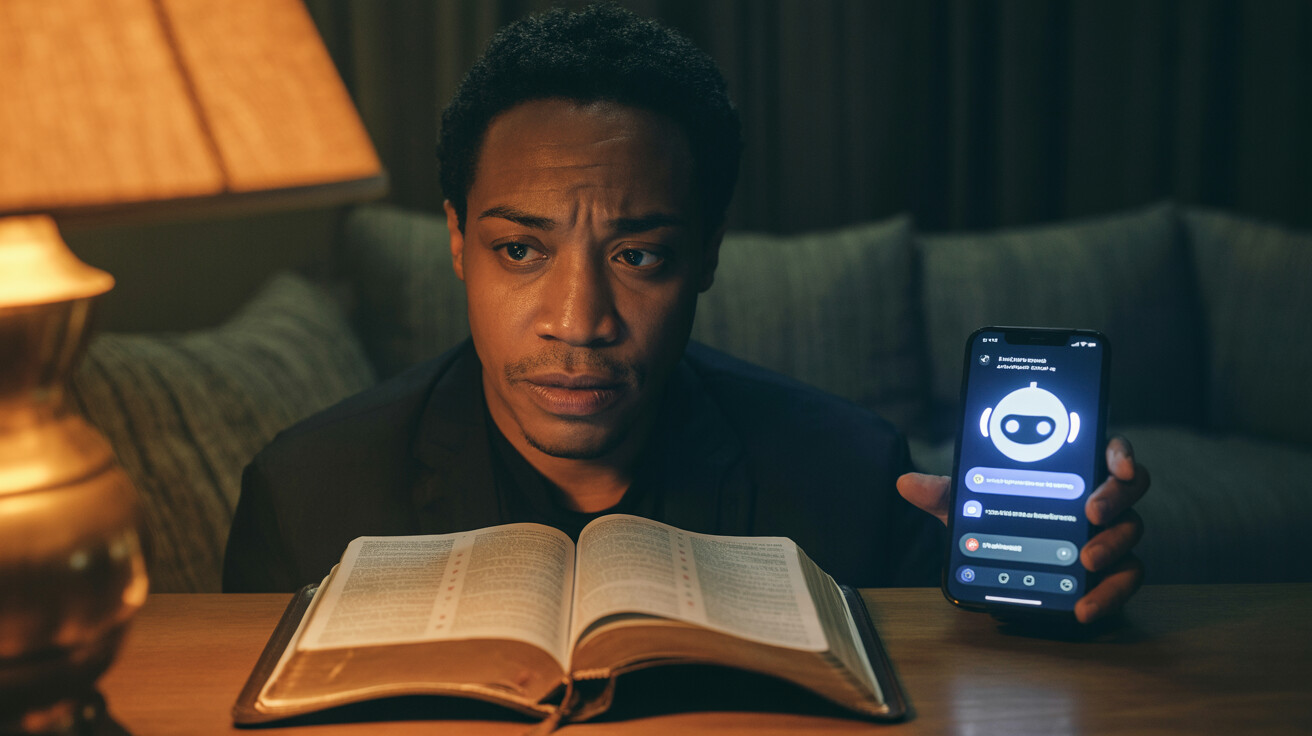
On May 18, Christianity Today published Jeffrey Bilbro’s essay “People of the Chatbot,” built around a simple but destabilizing claim: yes, God may speak through a Bible verse surfaced by AI, but easy access is not the same thing as transformative understanding. That sentence is sharper than it first appears, because it names one of the deepest spiritual temptations of the current moment: mistaking convenience for formation.

This is not mainly a technology story. It is a discipleship story.

For generations, Christians have assumed that if people had better access to biblical content, spiritual maturity would naturally follow. More sermons, more devotionals, more study tools, more translation options, more commentary, more teaching. Now AI arrives and takes that logic to its extreme. Ask a question, get a synthesized answer. Request a verse, receive one instantly. Want a summary of Romans, an explanation of lament, a comparison of translations, a prayer for grief, a sermon outline, a small-group icebreaker, or a theological definition? The machine is ready in seconds.

And therein lies the problem.

Because Christianity has never been built on access alone.

## The danger is not falsehood only. It is frictionless faith.

A lot of Christian conversations about AI focus first on accuracy. Will it get theology wrong? Will it hallucinate? Will it flatten nuance? Those are real concerns. But Bilbro’s argument points somewhere even more unsettling: what if the larger risk is not bad answers, but effortless answers? What if Christian AI tools become spiritually dangerous not only when they lie, but when they make understanding feel easier than discipleship actually is?

That matters because Christian understanding has always required more than information transfer.

It requires slowness. Attention. Prayer. Repetition. Humility. Communal correction. A willingness to stay with difficult truths long enough for them to work on you.

AI can speed up retrieval. It cannot automatically create any of that.

And if we are honest, modern Christians are already vulnerable here. We already live in a culture that rewards speed, summary, and immediate usefulness. We are already tempted to ask of Scripture, How fast can I get something from this? rather than How deeply can I be changed by this? AI does not create that temptation. It amplifies it.

## We may be turning Bible engagement into spiritual outsourcing

One of the most interesting things about the AI moment is how quickly it exposes habits that were already present.

A lot of Christians say they want to know God’s Word more deeply. But often what they really want is to get to the answer faster. They want the distilled version. The cleaned-up summary. The “main point.” The devotional takeaway without the wrestling. The comfort without the long apprenticeship of understanding. The guidance without the long obedience of listening.

AI is almost perfectly designed to serve that appetite.

Ask a difficult question and it will produce a digestible paragraph. Ask for comfort and it will gather language that sounds pastoral. Ask for theological clarity and it will build a plausible synthesis from the materials available to it. In some cases, that may genuinely help someone begin. But it may also quietly train Christians to outsource the very practices that once formed them.

That is the concern modern Christianity needs to sit with.

Because there is a real difference between assistance and replacement.

A commentary assists. A pastor assists. A study Bible assists. A friend assists.

But none of those were ever meant to replace prayerful reading, slow meditation, communal life, and embodied discipleship. AI can become one more assistant. But if Christians are not careful, it can also become the shortcut that slowly hollows out those older habits while making us feel more spiritually informed than we really are.

## Information has never been the same thing as communion

This is where the church needs to recover an older wisdom.

The Christian life is not primarily a knowledge-management system. It is not a puzzle solved by better summarization. It is a life of communion with God, obedience, repentance, worship, and love. The Bible is not simply a database of correct answers waiting to be efficiently queried. It is Scripture — living text through which the Spirit confronts, comforts, convicts, and forms the people of God.

That kind of relationship cannot be reduced to retrieval.

You can know the “right” answer about forgiveness and still not forgive. You can summarize Psalm 23 and still not trust the Shepherd. You can ask an AI for a prayer on grief and still avoid grieving before God. You can generate a Bible study on holiness and still remain untouched by holiness yourself.

That does not make AI evil. It makes human beings prone to confusing fluency with formation.

And modern Christianity has always had this weakness. We are often more impressed by people who can explain spiritual things than by people who are actually being transformed by them. The chatbot age may intensify that weakness by making spiritual fluency even cheaper.

## The church should neither panic nor surrender

The answer here is not reactionary fear.

Christians do not need to pretend AI has no value. A tool that helps people find passages, compare ideas, surface questions, or begin reflection may genuinely serve good purposes. Bilbro is not arguing that machines cannot quote Scripture truthfully. He is arguing that truth arriving easily is not identical to truth being received deeply. That distinction should shape the whole church’s posture.

So the right response is neither panic nor naïve enthusiasm.

It is discernment.

Churches, pastors, parents, and leaders should ask:

What kinds of spiritual habits are these tools encouraging?

Are they helping people move toward prayer, Scripture, and community?

Or are they helping people avoid those things while still feeling spiritually productive?

Are they increasing reverence, patience, and attentiveness?

Or just increasing convenience?

Those are the real questions.

Because the greatest danger of Christian AI may not be that it teaches heresy. It may be that it offers a version of religion so frictionless, so available, and so instantly responsive that people begin to mistake spiritual immediacy for spiritual maturity.

That would be a very modern mistake.

## Modern Christianity must decide what it thinks formation costs

In the end, this conversation is forcing the church to clarify something important: do we still believe transformation takes time?

Do we still believe some things can only be learned slowly? That some prayers can only be prayed after silence? That some understanding comes only through suffering, waiting, obedience, and community? That Scripture is not only something to consult, but something to dwell in?

If the answer is yes, then AI has a place — but a limited one.

It can point. It can assist. It can retrieve. It can organize. It can even, in some moments, unexpectedly help.

But it cannot replace the long formation of a human soul in the presence of God.

And if Christians forget that, they may become what Bilbro’s title warns against: not just people who use chatbots, but people of the chatbot — people whose spiritual instincts have been quietly reshaped by the logic of instant access.

That would be a profound loss, because Christianity has always asked more of us than efficiency.

It has asked for surrender.

Sponsored

God Over Everything Global Clothing - Faith, Fashion, Purpose
GOE Limited Drop - God Over Everything Apparel

3 Takeaways

  • The deepest risk of Christian AI may be convenience, not only inaccuracy. Christianity Today's May 18 essay argues that easy access to biblical answers is not the same thing as transformative understanding.
  • AI can assist spiritual life without forming it. The church must distinguish between retrieval tools and the slow work of discipleship.
  • Modern Christianity needs to recover confidence in spiritual slowness. Not everything important can be summarized without loss.

Bottom line: Christian AI may give people more access to biblical language than ever before. But unless the church keeps insisting on prayer, patience, community, and lived obedience, that access may produce more fluency without more transformation. And modern Christianity cannot afford to confuse the two.

Need a steadier next step for real life? Get your personalized daily coaching drop at ZUL Daily Verse — a Bible verse, a modern-day translation, and 3 practical actions for today.

Try ZUL Daily Verse