Scott Stapp Stopping a Rock Festival for Worship Says Something About What Happens When the Old Categories Stop Working
Creed has spent decades rejecting the “Christian band” label. That did not stop its frontman from pausing a festival set to sing worship.
Creed has been explaining for nearly three decades that it is not a Christian band. The clarification was necessary because the songs were full of spiritual language, biblical imagery and existential longing, and listeners kept collapsing those things into a genre label the band did not claim.
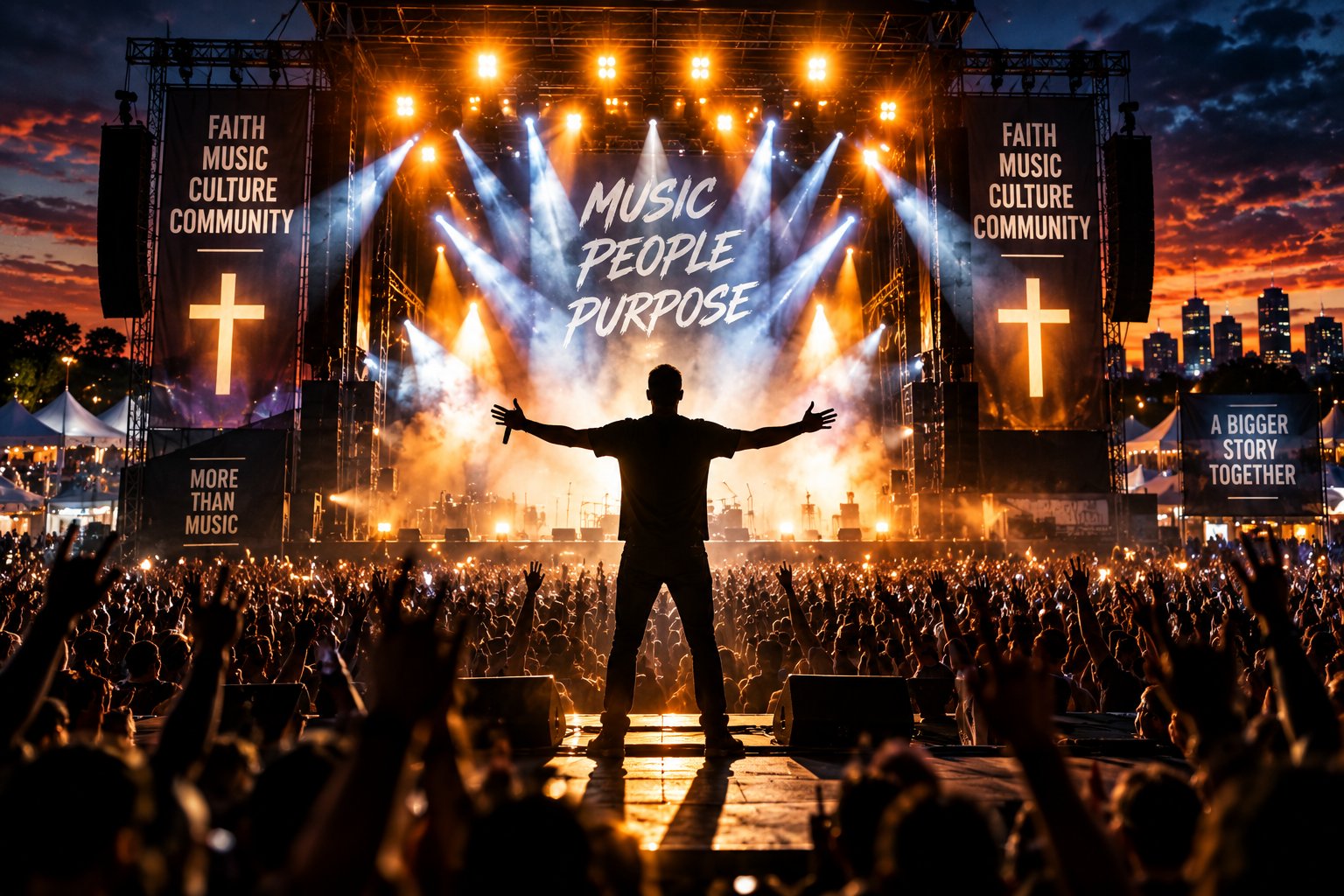
Then Scott Stapp stood onstage at Iowa’s Velocity Festival and sang part of Brandon Lake’s “Gratitude” with no band behind him. He spoke about worth, purpose and the search for what life is for. He invited a rock-festival crowd into a moment that, by any ordinary description, looked like worship.
The event did not settle the old argument, and it should not. The more interesting point is that the argument itself may have become less useful. Audiences no longer live in separate Christian and mainstream media ecosystems. A listener can move from Creed to Brandon Lake to Kendrick Lamar to Elevation Worship without experiencing those transitions as category crises.
Artists are becoming similarly difficult to sort. Stapp’s faith has long been part of his public story, particularly through addiction, collapse and recovery. What happened at the festival was not a new brand announcement. It was a mainstream rock star allowing explicit devotion to occupy space inside a mainstream rock show.
That is culturally significant because Christian expression in popular music has often been managed through containment. Put worship in worship spaces. Put Christian artists on Christian festivals. Put testimony in the interview. Keep the categories legible.
Stapp’s moment ignored that architecture. The song arrived where it arrived. The crowd responded. Then the band returned to its own catalog.
There is a temptation to overread celebrity faith moments, especially when Christians are eager for evidence that mainstream culture is becoming more open to belief. One spontaneous worship song does not prove a movement. But it does reveal a changing comfort level. Artists with complicated histories are increasingly willing to let faith appear in the same room as the rest of their lives rather than isolating it as a separate product.
Perhaps that is the more interesting future: not every believer in music becoming a Christian artist, but fewer artists feeling that an honest mention of God must be quarantined from the work that made people care about them in the first place.
Sponsored


Need a steadier next step for real life? Try ZUL Daily Verse for a Bible verse, a modern-day translation, and 3 practical actions for today.
Try ZUL Daily Verse