Skillet’s Billion-Stream “Monster” Moment Matters Because Christian Rock Doesn’t Need to Be Rehabilitated — It Needs to Be Remembered as a Real Force
Christian Rock Doesn’t Need to Be Rehabilitated — It Needs to Be Remembered as a Real Force.
The problem with Christian rock is not that it disappeared.
The problem is that too many people started talking about it as if it had to be rediscovered in order to matter again.
That is why Skillet’s “Monster” crossing 1 billion Spotify streams matters. The June 24 Christian Post coverage is not just a streaming milestone story. It is a reminder that Christian rock was never merely a subcultural curiosity. At its strongest, it was a real force — sonically, culturally, commercially, emotionally. And songs like “Monster” prove that some of that force did not evaporate when trends shifted. It stayed embedded in the larger musical bloodstream.
That matters because Christian pop culture often has a weak memory for its own harder-edged forms.
It remembers worship waves. CCM radio eras. Certain crossover moments. But when it comes to rock, metal, alt, and heavier lanes, it can become strangely apologetic — as though those forms were a phase, an experiment, or a guilty pleasure that needs constant explanation. Skillet’s billion-stream marker disrupts that whole posture. You do not accidentally stream a song a billion times. That kind of number means something more basic: the song entered public life in a durable way.
And that durability matters.
Because durability is one of the best tests of whether a piece of Christian-adjacent culture actually did more than win temporary internal applause. It means the music survived audience churn. Platform shifts. Changes in taste. The collapse of old gatekeepers. The rise of streaming. New generations of listeners who did not inherit the same Christian-market assumptions but still found something in the song worth returning to.
That is not nostalgia. That is cultural footprint.
The Christian Post pairs the milestone with news that the band is launching a new tour and a new chapter of music. That combination is significant. It means the billion-stream achievement is not being treated as a museum plaque. It is being folded into momentum. Legacy is being used as fuel, not just as evidence of what once worked.
Christian pop culture should take that seriously.
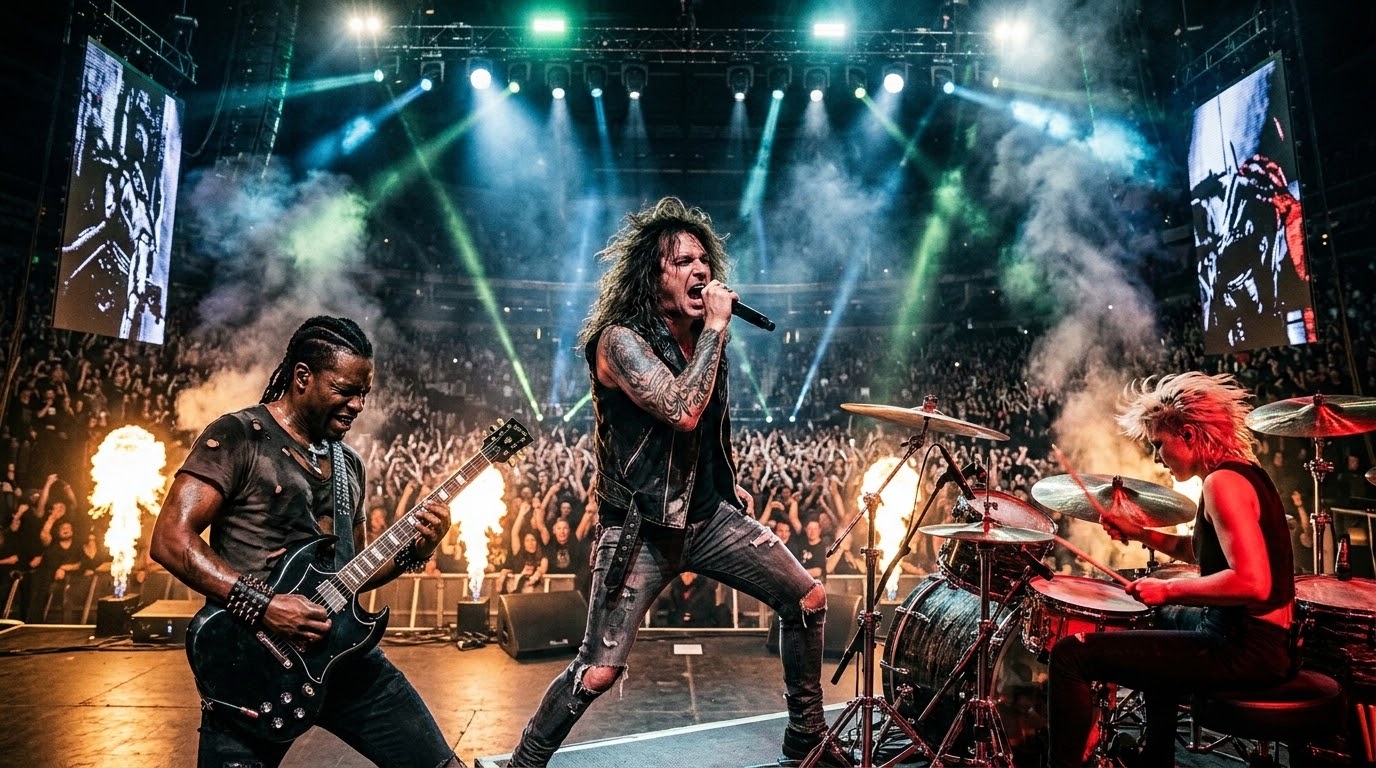
Because one of the mistakes it keeps making is acting like relevance belongs only to what is newest, softest, or easiest to platform. Rock has never fit those categories neatly. It is too physical, too dramatic, too loud, too emotionally charged, too hard to smooth out into safe inspiration. That is precisely why it matters. Rock gave Christian culture a way to sound aggressive without becoming hollow, theatrical without becoming fake, intense without having to apologize for having nerve.
And audiences still need that.
There are emotions that softer forms do not carry as well: rage, desperation, conflict, moral battle, inner fracture, survival energy.
Songs like “Monster” worked because they stepped into those emotional registers without pretending that spiritual life only sounds peaceful, resolved, or serene. That is one reason the song lasted. It named something real in people. Something darker, more conflicted, more volatile. And it did so in a way that did not strip the experience of moral seriousness.
That is what Christian rock, at its best, knew how to do.
So Skillet’s billion-stream milestone should not be interpreted as “surprising.” It should be interpreted as confirmation. Confirmation that harder-edged Christian music was never as marginal as some later narratives made it sound. Confirmation that Christian culture has often underestimated its own more confrontational, muscular artistic traditions. Confirmation that a song can come out of a faith-rooted world and still become part of a wider emotional soundtrack.
That is the real story.
Not whether Christian rock can still matter. It already proved it could.
The real question is whether Christian pop culture will remember how to build with that kind of force again — without toning it down, smoothing it over, or pretending that all credible faith music must now arrive in softer packages.
If Skillet’s moment teaches anything, it is that Christian rock does not need rehabilitation.
It needs memory. Confidence. And a culture willing to stop talking about it like it was a side road instead of one of the lanes that actually moved people.
Sponsored

3 Takeaways
- The Christian Post reported on June 24 that Skillet’s “Monster” became the only Christian song to reach 1 billion Spotify streams, alongside news of the band’s new tour and next chapter.
- This milestone matters because it proves Christian rock was not merely niche or temporary. It had — and still has — real cultural footprint.
- Christian pop culture should stop treating its harder-edged musical history like an embarrassing detour. Songs like “Monster” show that force, tension, and intensity remain part of what faith-rooted art can carry powerfully.
Bottom line: Skillet’s billion-stream “Monster” moment matters because Christian rock does not need to be rehabilitated. It needs to be remembered for what it already was: a real force that shaped how faith, struggle, and power could sound in public.
Need a steadier next step for real life? Try ZUL Daily Verse for a Bible verse, a modern-day translation, and 3 practical actions for today.
Try ZUL Daily Verse