Songwriters Winning a Major Case Against AI Music Matters Because Christian Creators Need to Decide What Human Creativity Is Actually Worth
Christian Creators Need to Decide What Human Creativity Is Actually Worth.
A court case involving AI music might seem more Silicon Valley than Christian pop culture.
It is not.
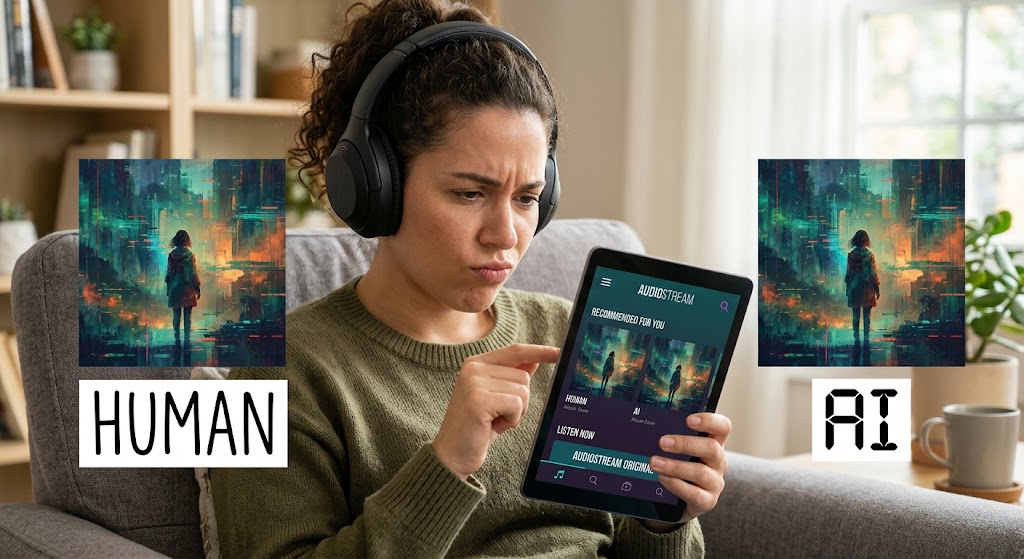
A Munich court recently sided with German performing-rights organization GEMA in a case against AI music company Suno, finding that protected songs had been used in ways that violated copyright law.
The case matters to musicians everywhere.
Christian creators should be paying especially close attention.
Because Christian culture has embraced generative AI extraordinarily quickly.
Write the caption. Make the graphic. Draft the sermon. Generate the backing track. Create the song demo. Produce the video.
The efficiencies are obvious.
The moral questions are not.
Artificial intelligence forces Christian creators to answer a very old question in a new technological environment:
What do we owe the person whose work made our work possible?
Copyright law gives one kind of answer.
Christian ethics should go deeper.
Every creative work comes from somewhere.
Years of listening. Practice. Failure. Influence. Mentors. Traditions.
Creativity has never meant creating from nothing.
The issue with generative AI is scale and consent.
A musician studies another musician because inspiration is part of human cultural exchange.
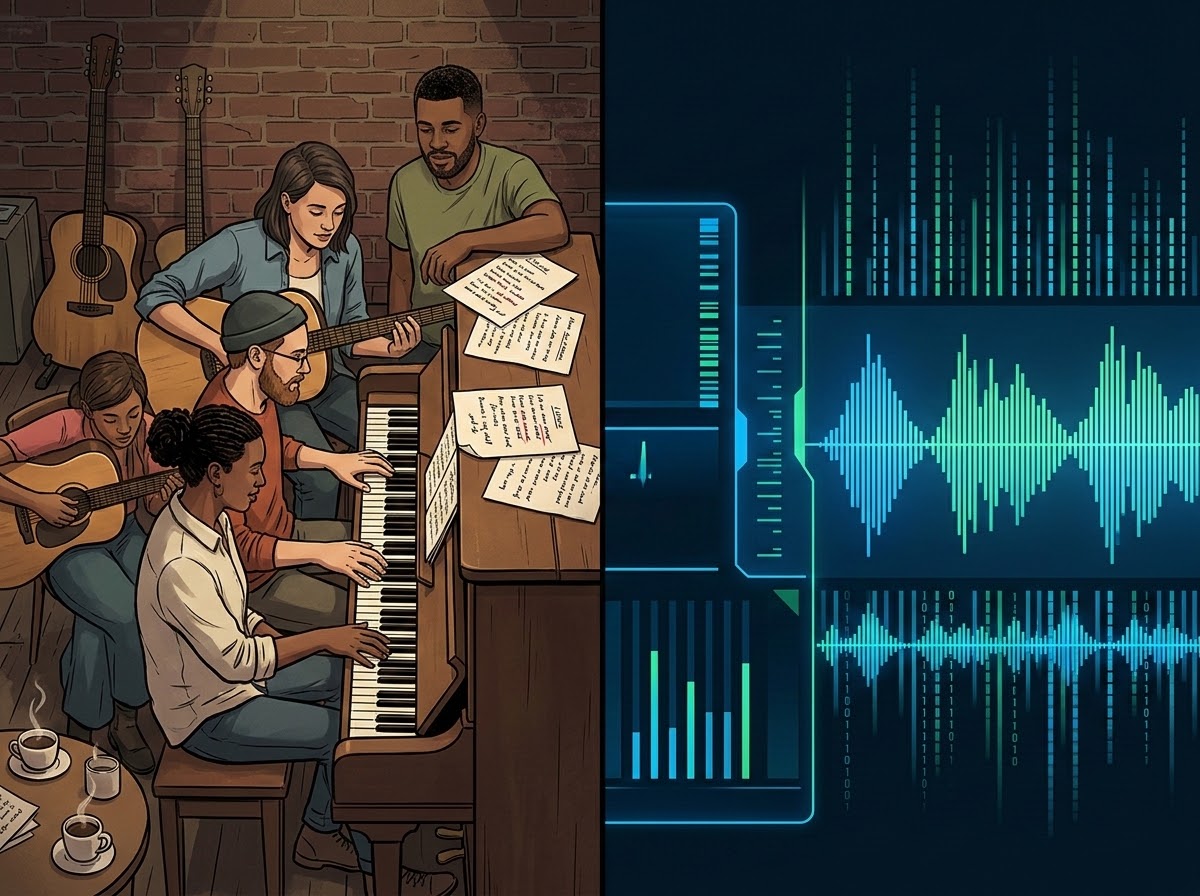
A machine can ingest millions of works, identify patterns and create output at industrial speed.
At some point, “influence” becomes too small a word.
The Munich ruling centers on exactly that tension.
If a system can reproduce recognizable protected works, then the claim that it merely learned abstract musical principles becomes harder to defend.
For Christian artists, the question cannot only be, “Is this legal?”
It must also be, “Is this just?”
That distinction matters.
Christians frequently talk about protecting human dignity in conversations about life, labor and exploitation.
Creativity belongs in that conversation.
A songwriter’s work is labor.
So is a photographer’s. An illustrator’s. A filmmaker’s. A designer’s.
AI may eventually become one of the greatest creative tools ever invented.
But a tool should expand human creativity rather than quietly erase the economic value of the humans whose work taught the tool what creativity looks like.
Christian culture has a particular reason to care because it claims that people possess worth that is not reducible to productivity.
If that is true, convenience cannot be the only measure.
The fastest song is not necessarily the best song.
The cheapest artwork is not necessarily the most ethical artwork.
And the fact that software can generate something does not automatically answer whether we should generate it.
There is also an artistic issue.
Christian art already struggles with sameness.
Generative systems trained on existing patterns could make that problem dramatically worse.
If everybody asks the same machines to generate worship songs based on the same successful worship songs, eventually the genre may become a hall of mirrors.
Human weirdness matters.
Human limitation matters.
A songwriter who grew up in Detroit, lost a parent at 19, loves jazz chords and wrestled with Psalm 88 for ten years can write something no optimization engine would naturally predict.
That is not inefficiency.
That is the point.
AI can help.
But Christian creators should resist the temptation to treat the human being as the expensive part of creativity we finally figured out how to remove.
Sponsored

3 Takeaways
- A German court’s ruling against Suno strengthens the argument that AI companies cannot treat copyrighted music as limitless free training material.
- Christian creatives should ask ethical questions beyond minimum legal compliance, particularly around consent and compensation.
- Human unpredictability is not a defect in creativity. It may be one of its greatest sources of meaning.
Bottom line: Songwriters winning against AI music matters because Christian creators now have to decide what human creativity is actually worth. If people matter more than efficiency, our creative practices eventually have to reflect it.
Need a steadier next step for real life? Try ZUL Daily Verse for a Bible verse, a modern-day translation, and 3 practical actions for today.
Try ZUL Daily Verse