
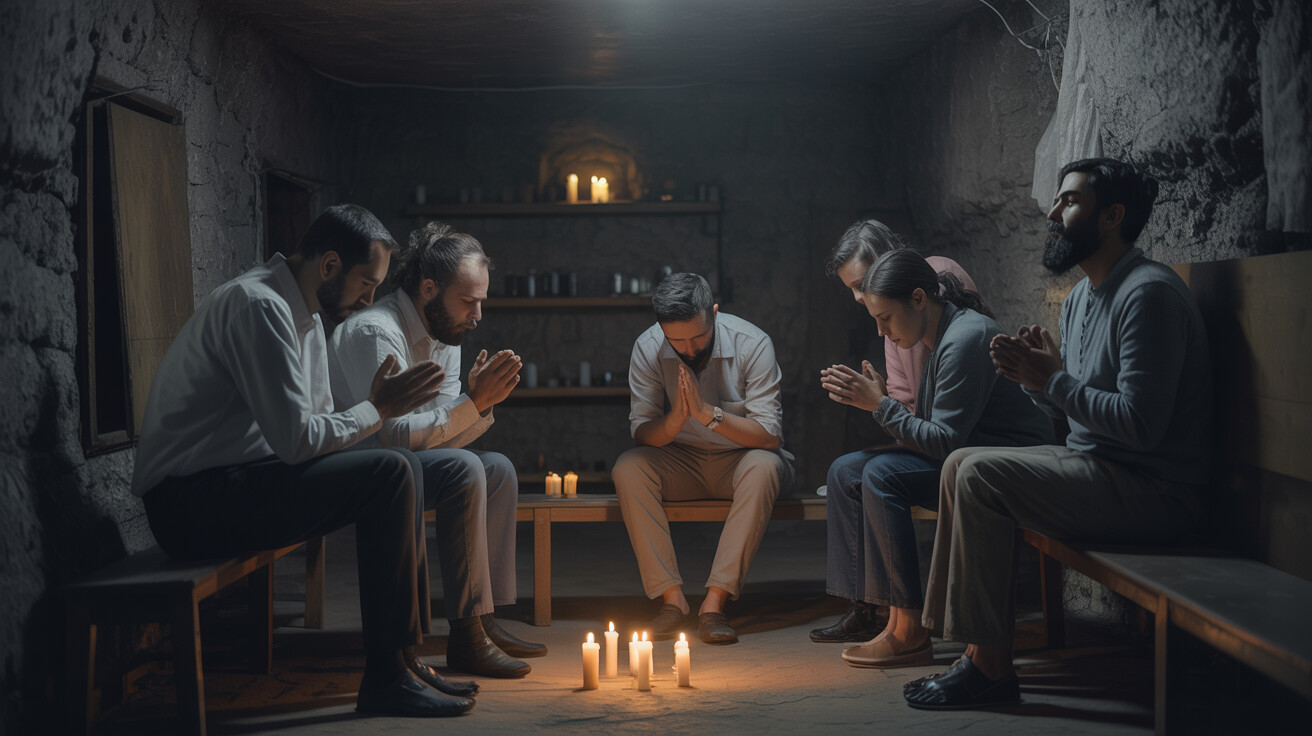
Western Christians Love to “Speak Up.” Suffering Churches Sometimes Need Something Harder.
Christianity Today interviews the daughter of an imprisoned Chinese pastor — and challenges Western advocacy to become more humble, more patient, and more teachable.
Christianity Today’s May 20 interview “Why China’s Persecuted Christians View Western Advocates with Skepticism” offers one of the more uncomfortable but necessary correctives Western believers will hear this month. In the interview, the daughter of imprisoned pastor Jin “Ezra” Mingri describes why some persecuted Christians are wary of the advocacy patterns that Western churches often assume are obviously helpful. The issue is not whether concern is good. It is whether concern actually understands the suffering it claims to represent.
That distinction matters.
Western Christians often imagine solidarity in activist terms: speak louder, raise awareness, pressure governments, organize campaigns, amplify names, move quickly. Sometimes those actions help. But the CT interview suggests that persecuted communities may also carry theological and practical instincts that do not map neatly onto Western expectations. Their understanding of suffering, witness, prudence, and endurance may be shaped not first by media logic but by long habits of costly faithfulness.
Modern Christianity needs this correction because it exposes one of our recurring temptations: assuming that concern gives us interpretive authority.
It does not.
There is a difference between standing with suffering believers and projecting our own categories onto them. There is a difference between advocacy and possession. There is a difference between wanting to help and being willing to listen long enough to discover that our preferred forms of help may not always fit the situation.
That is especially difficult for Christians formed in highly communicative, highly reactive cultures.
We are used to immediacy. A crisis appears; we comment. A story breaks; we post. A name surfaces; we amplify. We often assume speed is compassion.
But the global church can reveal another kind of wisdom: suffering sometimes creates a theology of patience, hiddenness, and endurance that feels alien to modern Western reflexes. For persecuted Christians, the question is not only how to get attention. It is how to remain faithful under pressure without mistaking visibility for deliverance.
This does not mean Western advocacy is worthless. It means it must become humbler.
It must ask:
What do suffering Christians themselves believe faithfulness requires?
What kinds of public action would actually protect them?
What assumptions are we bringing from our own activist or political frameworks?
Are we trying to help them endure, or are we trying to use their suffering to reinforce our own sense of moral seriousness?
Those are hard questions. But they are healthy ones.
Modern Christianity often talks about the persecuted church in ways that flatten actual believers into symbols. We use them to validate convictions, support narratives, or energize fundraising. The CT interview resists that flattening by restoring subjectivity to the people suffering. They are not merely examples. They are Christians with theological traditions, prudential judgments, family ties, and different understandings of what faithfulness under duress can look like.
That is a gift to the wider church.
Because if Western Christianity is going to be truly global in its imagination, it will need more than sympathy. It will need teachability. It will need the humility to let suffering Christians shape the terms of solidarity rather than merely receiving solidarity on Western terms.
That may be the harder love.
And likely the more faithful one.
3 Takeaways
- Concern for persecuted Christians is not enough by itself. It must be shaped by careful listening to the communities actually suffering.
- Western activism can mistake speed and visibility for wisdom. The church needs a more patient, teachable posture.
- A truly global Christianity requires humility, not just awareness. Suffering believers are not symbols; they are teachers too.
Bottom line: Western Christians often want to “speak up” for the persecuted church. Sometimes that is necessary. But Christianity Today’s interview is a needed reminder that solidarity becomes far more faithful when it begins with listening rather than assumption.
Need a steadier next step for real life? Get your personalized daily coaching drop at ZUL Daily Verse — a Bible verse, a modern-day translation, and 3 practical actions for today.
Try ZUL Daily Verse