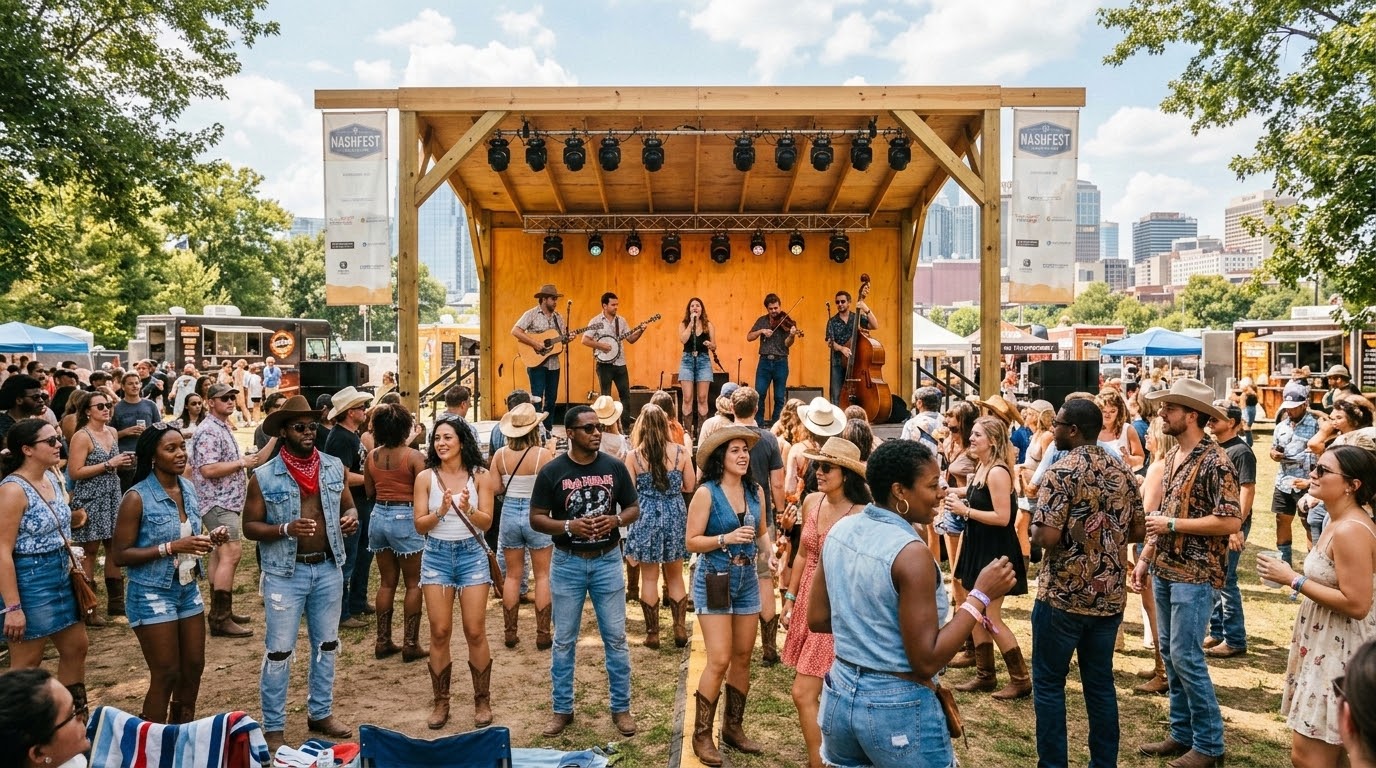
Brandon Lake’s CMA Fest Cowboy Church Drew a Crowd Because People Still Want Faith in Public — Just Not in the Old Packaging
People still want faith in public — just not in the old packaging.
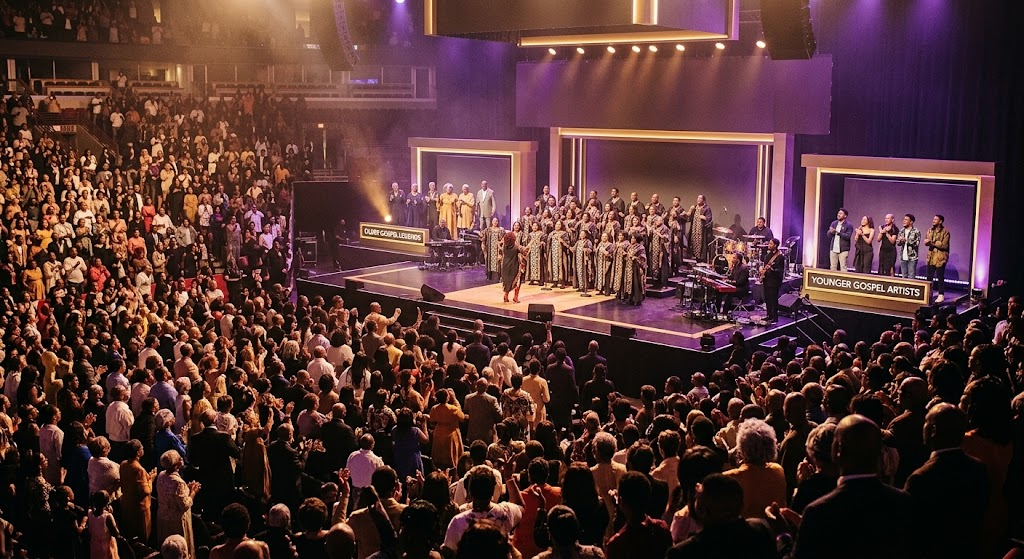
When RELEVANT reported on June 8 that Brandon Lake’s CMA Fest Cowboy Church drew a massive crowd — along with a few surprise guests — the headline sounded quirky enough to treat as novelty. Cowboy church at CMA Fest? Big turnout? Interesting crossover. But the deeper reason this story matters is that it shows something modern Christian culture keeps learning in real time: people are still open to public faith, but they often receive it best when it shows up inside shared cultural spaces instead of behind exclusively Christian walls. (RELEVANT)
That distinction is important. CMA Fest is not a revival meeting. It is a country-music event, a fan experience, a summer cultural gathering, and a commercial entertainment environment. So when faith-centered programming works there, it tells us that the issue is not whether mainstream audiences can tolerate Christianity at all. It is whether Christianity can appear in forms that feel culturally legible, human-scaled, and non-defensive. Brandon Lake’s “Cowboy Church” worked because it did not feel like an interruption of the event. It felt like an extension of something already present in country culture — story, longing, community, testimony, and the search for meaning beneath performance. (RELEVANT)
That is one reason Christian pop culture should pay close attention to this moment. For years, a lot of faith-based programming has assumed that if you want spiritual seriousness, you need a fully controlled Christian setting. But events like this suggest the opposite may sometimes be true. Shared public spaces can lower the temperature. They make room for curiosity. They let faith arrive without demanding that everyone first enter a recognizably religious institution. That does not dilute the message. In some cases, it may make the message easier to hear. (RELEVANT)
And that matters because audiences are increasingly suspicious of packaging. They are quick to recognize overproduced inspiration, overly polished religious branding, or any event that feels engineered to create a “moment.” What they are slower to resist is something that feels more lived-in: songs, prayer, witness, and shared atmosphere emerging naturally inside a place where they were already present for other reasons. In that sense, Cowboy Church represents a broader shift. It is not Christianity hiding. It is Christianity learning how to show up in public without sounding like it arrived only to market itself. That is a very different posture, and probably a much healthier one. (RELEVANT)
This is also a reminder that country culture continues to be one of the more porous borders between faith and mainstream life. Country music has always carried themes that overlap with religious language: grace, regret, family, home, failure, redemption, and the ache to be restored. So when a Christian artist steps into that world with something explicitly spiritual, it often reads less like foreign material and more like a clearer naming of themes already underneath the surface. That is why this event did not need to feel forced. The emotional grammar was already there. (RELEVANT)
The takeaway for Christian pop culture is bigger than one crowd size. It is that faith does not only spread through Christian infrastructure. Sometimes it moves most effectively through adjacency — through country music, late-night television, sports, film, podcasts, and creative events where the audience did not necessarily come for religion but is still willing to encounter truth when it appears with enough honesty and skill. If Brandon Lake’s CMA Fest moment signals anything, it is that public faith still has resonance when it arrives as presence rather than pressure. (RELEVANT)
Sponsored


3 Takeaways
- Brandon Lake’s June 8 CMA Fest event matters because it placed faith inside a major mainstream country-music setting, not a closed Christian environment. (RELEVANT)
- The success of the event suggests people remain open to public faith when it shows up in culturally legible, non-defensive forms. (RELEVANT)
- Christian pop culture may grow more effectively through shared public spaces than through ever-tighter subcultural isolation. This is an interpretation, but it is well supported by the kind of crossover RELEVANT described. (RELEVANT)
Bottom line: Brandon Lake’s CMA Fest Cowboy Church matters not because it proves Christian programming can draw a crowd, but because it shows that faith still carries public appeal when it enters shared cultural space with warmth, confidence, and enough humility not to force the room. (RELEVANT)
If you want something more grounded than just another cultural moment, start with ZUL Daily Verse — a daily drop of Scripture, a modern-day translation, and practical action for real life.
Try ZUL Daily Verse