
Christian Music Showing Up at CMA Fest Means Faith Isn’t Staying in Its Own Lane Anymore
Faith is no longer staying in its own lane — and CMA Fest proves it.
Something important happened at CMA Fest this year, and it was bigger than one set list.
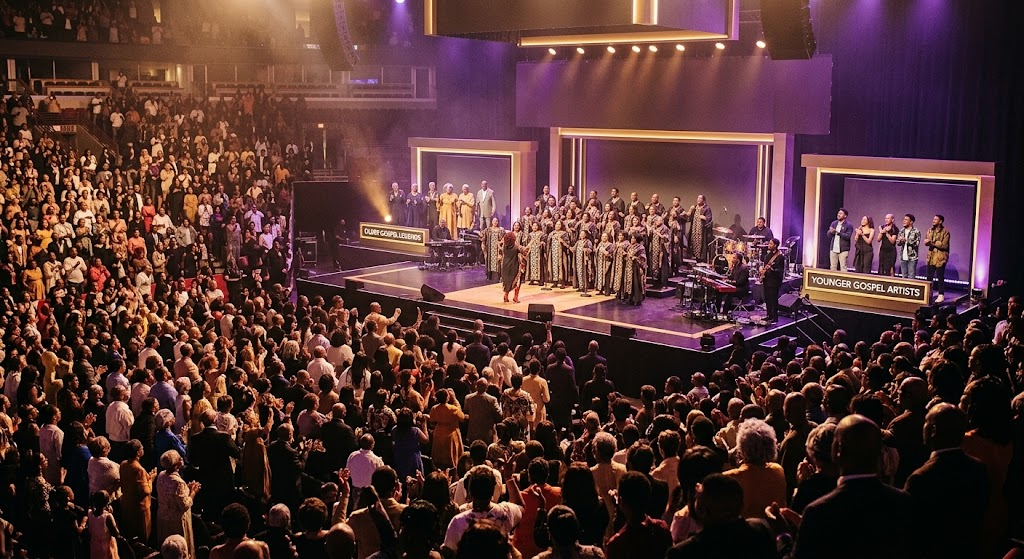
CCM Magazine’s June 2 coverage argued that Christian music is taking over CMA Fest, pointing to the visible presence of faith-rooted artists in one of country music’s biggest mainstream spaces. That matters because CMA Fest is not a Christian event. It is a major pop-culture platform, a place where country music, celebrity, branding, fandom, and cultural identity all collide in public. When Christian artists show up there in meaningful ways, it tells us something about the moment we are in. (CCM Magazine)
The easy version of this story would be: “Christian music is winning.”
That is not wrong, exactly. But it is not deep enough.
The more interesting story is that faith no longer has to stay sealed inside its own industry packaging in order to be heard. For a long time, Christian music often lived in a separate ecosystem — separate radio, separate tours, separate awards, separate expectations. That world still exists, of course. But stories like this suggest that the old wall between “Christian music” and “mainstream culture” is getting more porous. (CCM Magazine)
And that matters because younger audiences do not experience culture in neat categories anymore.
They do not always care whether a song lives in the “Christian” aisle or the “country” aisle or the “playlist” aisle. They care whether it feels true. Whether it sounds alive. Whether it carries something human enough to hold their attention. In a streaming world, the old gatekeeping lines mean less than they used to. A person can go from worship music to country to rap to an interview clip to a podcast prayer in ten minutes and never feel like they changed worlds. Culture is flatter now. That creates confusion, yes. But it also creates openings.
CMA Fest is one of those openings.
Because country music has always carried certain themes that are spiritually adjacent, even when they are not explicitly religious: home, memory, heartbreak, redemption, failure, grace, roots, belonging, and the longing to come back from somewhere lost. Christian artists entering that environment are not stepping into alien territory. They are stepping into a genre that already knows how to hold testimony-shaped emotion. That may be one reason the crossover feels more natural than forced. (CCM Magazine)
Still, Christian pop culture should be careful about how it reads moments like this.
Not every mainstream appearance is revival. Not every crossover is depth. Sometimes Christian audiences get so excited that faith is visible in public that they stop asking whether the actual work being celebrated is artistically strong, spiritually resonant, or culturally durable. Visibility can be overread. But it can also be underread. And this is where the CMA Fest story is worth slowing down for.
What we may be seeing is not simply “more Christian artists in country spaces.” We may be seeing a shift in how public faith is carried.
Less as subculture. More as texture. Less as niche signaling. More as presence inside wider cultural forms.
That is a different kind of influence.
It means a Christian artist does not have to arrive as a mascot for the entire faith market. They can arrive as an actual artist whose formation, convictions, and storytelling come with them into the room. That tends to land better anyway. Mainstream audiences are often far more open to lived faith than to religious packaging. They will listen to a person before they trust a label.
That is why this moment matters for more than music fans.
It says something about where Christian culture may be headed next. Not deeper into the bubble, but into contested shared spaces where faith has to live as craft, beauty, conviction, and emotional honesty — not just category identity. In other words, Christian influence may increasingly depend on whether believers can make work that belongs in the room without hiding who formed it.
That is a harder calling than just building parallel platforms.
But it may also be the more fruitful one.
And maybe that is the deeper signal here: Christian pop culture is not most alive when it protects itself from the mainstream. It is most interesting when it enters wider culture carrying something the wider culture still needs — depth, hope, moral texture, and language big enough for grace.
Sponsored


3 Takeaways
- Christian visibility at CMA Fest matters because it places faith-rooted artists inside a major mainstream cultural event. CCM’s June 2 coverage frames this as a real Christian-music presence, not a fringe cameo. (CCM Magazine)
- The bigger story is not just crossover success, but the breakdown of old cultural walls. Younger audiences increasingly hear music through mood, meaning, and authenticity rather than industry category lines. (CCM Magazine)
- Christian pop culture grows stronger when it can enter shared spaces without losing artistic or spiritual integrity. That is a better measure than visibility alone.
Bottom line: Christian music showing up at CMA Fest does not prove some sweeping cultural return to faith. But it does suggest that belief still has public resonance when it arrives through artists who can carry conviction into mainstream rooms without sounding like they came only to market it. (CCM Magazine)
If you want a steadier next step than just another article, start with ZUL Daily Verse — a daily drop of Scripture, a modern-day translation, and practical action for real life.
Try ZUL Daily Verse