House of Worship Going Into 400 Theaters Matters Because Worship Music Is Becoming Cultural History While We’re Still Singing It
Worship Music Is Becoming Cultural History While We’re Still Singing It.
Museums usually come after movements.
Documentaries come after eras.
Someone eventually looks backward and says: this mattered.
What makes House of Worship interesting is that modern worship music is receiving that treatment while the songs are still being sung every Sunday.
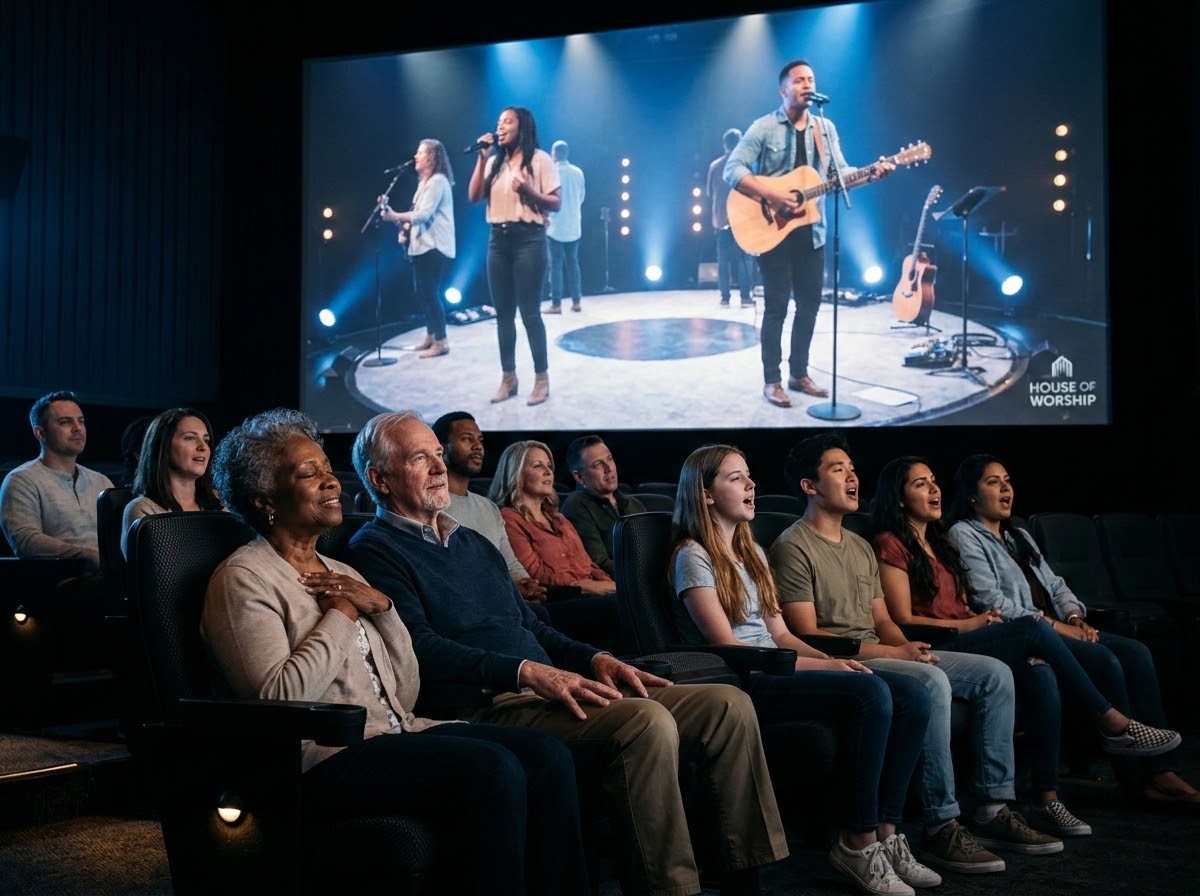
The project is scheduled for a nationwide theatrical run in more than 400 theaters, bringing together 25 prominent worship artists and songwriters to revisit songs that shaped contemporary church culture.
Think about what that means.
“How Great Is Our God.” “Shout to the Lord.” “Here I Am to Worship.” “Mighty to Save.” “Breathe.”
These songs are no longer simply songs.
They are memory containers.
Someone heard one at camp. Someone sang another at a funeral. Someone met God while a church band stumbled through one in 2004. Someone played another until the CD scratched.
Modern worship has now existed long enough to have generations.
That is culturally significant.
Christian pop culture tends to have poor historical memory.
We rush from what is current to what is next.
But songs shape theology.
They shape emotional vocabulary.
They shape what believers expect worship to feel like.
That makes looking backward useful.
Not because everything from the past deserves revival.
Some songs age badly.
Some theology ages badly.
But a culture that never examines its inheritance does not really know what it has inherited.
The strongest idea behind House of Worship is the intergenerational one.
Michael W. Smith and Darlene Zschech sit in the same story as younger voices.
That is how musical traditions remain alive.
Not preservation behind glass.
Transmission.
An older song enters a younger voice and becomes slightly different without losing its origin.
That is how gospel music has always worked.
It is how hymns survived.
It may be how contemporary worship eventually becomes something deeper than an industry category.
The theater setting also matters.
Worship music has mostly been experienced in church buildings, concerts, headphones and cars.
Putting its story on cinema screens reframes it as cultural material worthy of examination.
That is a subtle but important step.
Christian music is beginning to archive itself.
It should.
Because if Christians do not tell the story of what their music meant, someone else eventually will.
Sponsored


3 Takeaways
- House of Worship is heading to more than 400 U.S. theaters and features 25 worship artists and songwriters.
- Modern worship music has existed long enough to become intergenerational cultural history.
- Remembering older songs should be about transmission, not nostalgia.
Bottom line: House of Worship matters because worship music is becoming cultural history while churches are still singing it — and a culture mature enough to create art should also become mature enough to remember how that art shaped it.
Need a steadier next step for real life? Try ZUL Daily Verse for a Bible verse, a modern-day translation, and 3 practical actions for today.
Try ZUL Daily Verse