Michale Graves Making Christian Music Is Interesting Not Because It’s Shocking — But Because Conversion Still Interrupts the Aesthetic Scripts We Expect People to Follow
Conversion still has the power to interrupt the aesthetic scripts we expect people to follow.
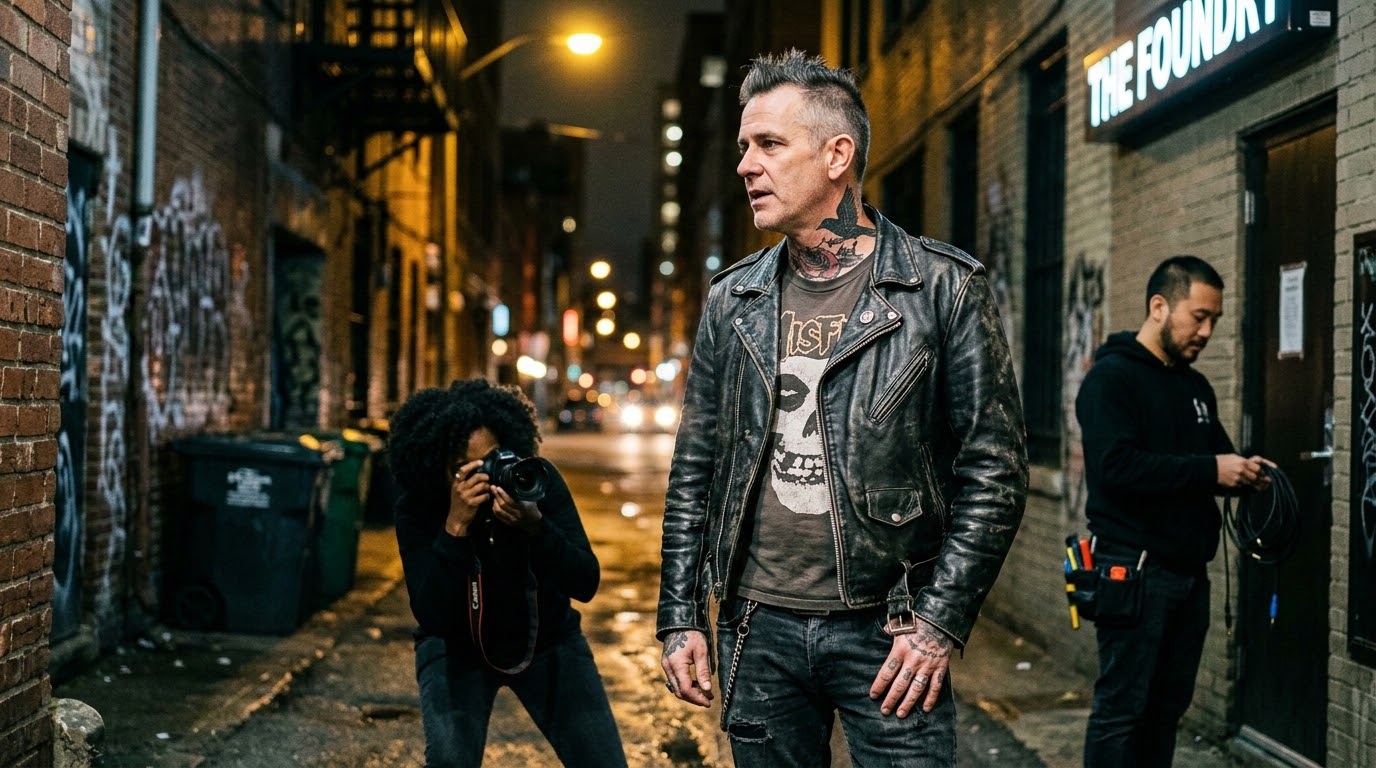
CCM Magazine’s May 28, 2026 profile, “Michale Graves: A Misfit’s New Mission,” is one of those stories that instantly grabs attention because it seems to violate a script. Former Misfits singer. Christian music. It sounds improbable enough to risk being treated like novelty. But CCM’s own write-up leans the other way. It frames the news not as ironic or gimmicky, but as “unexpected in the best possible way.” That is what makes the story worth taking seriously. (ccmmagazine.com)
Because Christian pop culture is at its most interesting when it remembers that faith does not only move through familiar aesthetic channels. It does not only show up in clean branding, radio-safe narratives, or the kinds of artists who already look spiritually legible to Christian audiences. Sometimes the most revealing stories are the ones that interrupt the visual and cultural expectations everyone had in place.
That is why Graves matters.
Not because Christian culture needs more shock value. It does not. And not because every dramatic genre-crossing story is automatically deep. It is not. But conversion or redirection stories still carry unusual force because they remind audiences that identity is not as fixed as subcultures want it to be. Punk, horror-adjacent iconography, outsider energy, Christian music — modern culture tends to file those things into separate drawers. A story like this pulls the drawers open and says human lives do not stay filed that neatly. (ccmmagazine.com)
That is a useful corrective.
Because one of the weaknesses of Christian pop culture is that it can become too visually predictable. It learns to recognize “Christian” by tone, dress, sound, platform, and language cues. That can create trust, but it can also create blindness. It trains audiences to expect grace only in approved forms. A figure like Graves interrupts that pattern. He reminds the whole ecosystem that spiritual movement often looks stranger than the market categories we built around it.
And that strangeness has value.
It destabilizes the easy separation between sacred and countercultural aesthetics. It raises the question of whether Christianity still has enough confidence in its own message to let grace show up in people who do not arrive already dressed for the part. That is not a small issue. It is one of the places where Christian subculture most often reveals whether it prefers order or transformation.
CCM’s story feels alive because it seems aware of that tension. The surprise is part of the appeal, but the publication is also signaling that this is more than a stunt. It is an encounter with the fact that spiritual direction can upend an artistic identity without simply erasing everything that came before. And that is where the pop-culture interest really begins.
Because the most compelling transformations are rarely the ones that become instantly tidy.
They are the ones that force everyone watching to ask harder questions: Can faith redirect a life without flattening a personality? Can someone carry the marks of one world while genuinely moving toward another? Can Christian music make room for artists whose stories do not fit the expected template?
Those questions matter because the audience is broader now. Younger listeners especially do not always want “safe-looking” transformation stories. They want stories with enough tension left in them to feel real. A Graves-style story lands because it still carries visible friction. It does not arrive polished. It arrives disruptive.
And disruptive is not the worst thing Christian pop culture could use a little more of.
Sponsored


3 Takeaways
- CCM’s May 28 story frames Michale Graves’ move into Christian music as surprising but sincere, not ironic or gimmicky. (ccmmagazine.com)
- The deeper significance is that faith is interrupting a familiar cultural script. That makes the story more than novelty — it becomes a test of whether Christian pop culture still expects grace to show up in unexpected forms.
- Christian music grows more interesting when it can hold stories that are not instantly tidy or aesthetically pre-approved. That is one reason this kind of conversion-adjacent story still matters.
Bottom line: Michale Graves making Christian music is not interesting just because it sounds shocking on paper. It is interesting because conversion still has the power to interrupt the aesthetic scripts we expect people to follow — and Christian pop culture needs more room for that kind of surprise. (ccmmagazine.com)
If you want something steadier than whatever identity the culture is asking you to perform today, start with ZUL Daily Verse — a daily drop of Scripture, a modern-day translation, and practical action for real life.
Try ZUL Daily Verse