TobyMac and Third Day Reigniting “Campfire” Says Christian Nostalgia Only Works When It Still Feels Alive
Christian nostalgia only works when it still feels alive.
When CCM Magazine reported on June 12 that TobyMac and Third Day had reignited “Campfire,” the easy read was nostalgia. Two major names with deep roots. Shared history. Familiar songs. A warm glow for longtime fans. And yes, nostalgia is absolutely part of the appeal. But the more interesting question is why Christian pop culture keeps returning to certain legacy artists in the first place — and why some of those returns feel alive while others feel like museum pieces. (ccmmagazine.com)
That distinction matters.
Because Christian nostalgia can become a trap. It can turn into a low-risk emotional strategy: replay the songs, revisit the era, repackage the memories, and let the crowd feel safe again. There is nothing automatically wrong with that. In fact, memory is part of culture. But the problem comes when Christian pop culture starts confusing memory with vitality. A legacy moment only matters if it still carries present-tense force. Otherwise, it is just borrowed warmth.
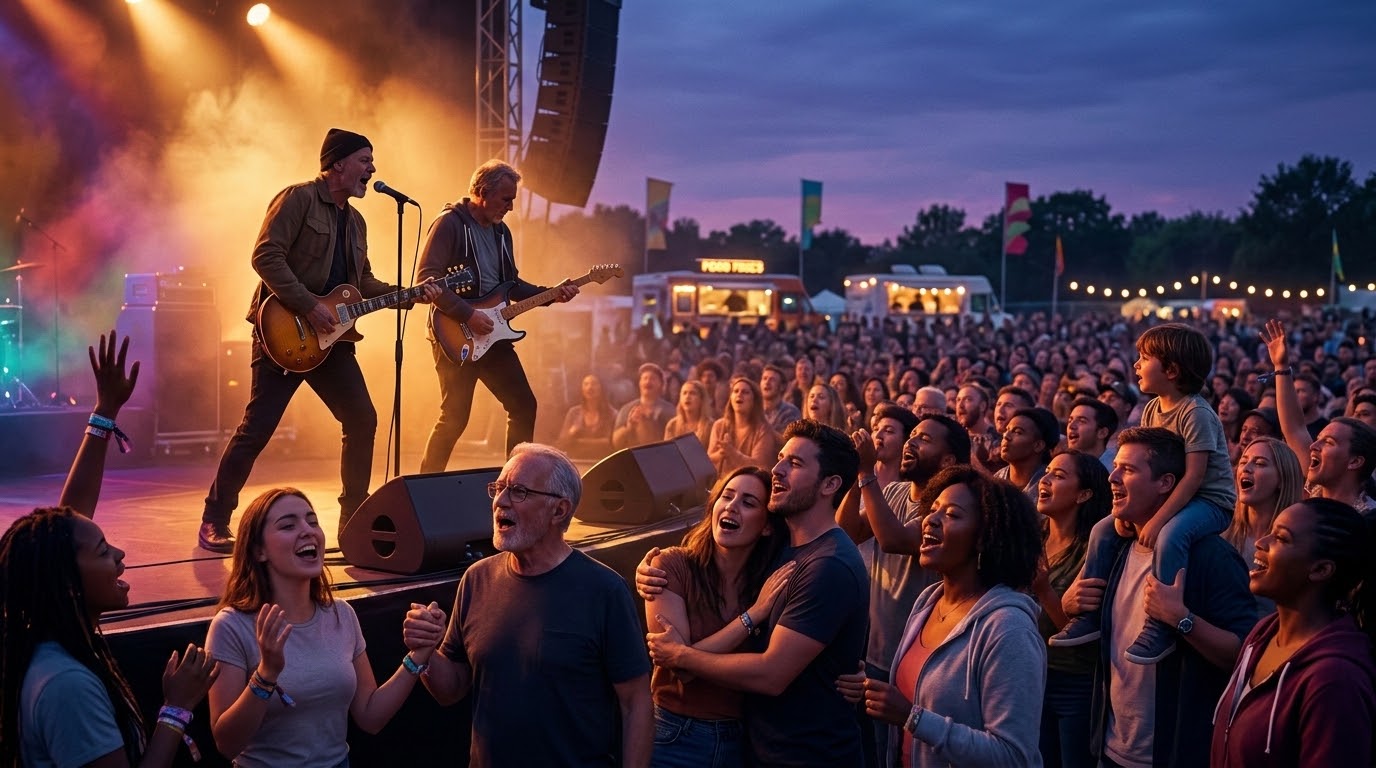
What makes a “Campfire” moment interesting is that it suggests something more than mere throwback branding. “Campfire” was always effective because it felt intimate without becoming small — communal, acoustic, emotionally direct, but not stripped of energy. Bringing that spirit back now works only if it still speaks to something current in the audience: the desire for rootedness in an era of content overload.
That is where the cultural shift comes in.
A lot of younger audiences — and not only younger audiences — are tired of Christian music feeling overproduced in both sound and strategy. Too polished. Too packaged. Too optimized for consumption rather than encounter. When legacy artists return in a format that feels human-scaled, relational, and lived-in, it can read less like regression and more like relief. Not “take us back,” but “give us something real again.”
That is why this kind of reunion still has power.
TobyMac and Third Day each represent different strands of Christian music history: TobyMac with innovation, crossover instincts, and rhythmic restlessness; Third Day with Southern weight, rock gravitas, and worship-adjacent emotional depth. Put together, they do more than trigger memory. They represent a time when Christian music still felt like it was building identity, not just feeding an algorithm.
And that may be the deeper attraction now.
Christian pop culture is in a strange season where it is simultaneously chasing the future and craving texture from the past. Legacy moments work when they do not merely replay what used to matter, but remind the audience what it felt like when the music carried community, distinctiveness, and emotional risk. If “Campfire” can still do that, then its return is not just nostalgia. It is a test of whether Christian music can still gather people around something shared that feels warmer than branding and more human than production.
That is a much better use of memory.
Because the point of nostalgia should not be escape. It should be recovery — recovering a sense of what was worth loving in the first place, and asking whether it still has enough life to matter now. If TobyMac and Third Day are tapping into that, then the reunion is not backward-looking at all. It is a reminder that some forms of Christian cultural energy age well because they were never only about trend. They were about resonance.
And resonance lasts longer.
Sponsored


3 Takeaways
- CCM’s June 12 coverage of TobyMac and Third Day reviving “Campfire” is more than a reunion story. It signals the continued cultural power of legacy artists when the format still feels emotionally alive. (ccmmagazine.com)
- Christian nostalgia works only when it delivers present-tense reality, not just recycled memory. That is why some reunion moments land and others do not.
- The deeper appeal may be relief from overproduced Christian content. Human-scaled, communal formats now feel stronger precisely because so much of modern culture feels optimized and thin.
Bottom line: TobyMac and Third Day bringing “Campfire” back matters not because Christian audiences need another memory hit, but because nostalgia still has value when it recovers something living — community, texture, and songs that still know how to gather people rather than just reach them. (ccmmagazine.com)
If you want something steadier than whatever the culture is recycling this week, start with ZUL Daily Verse — a daily drop of Scripture, a modern-day translation, and practical action for real life.
Try ZUL Daily Verse